

The digital age has turned financial markets into a high-speed rollercoaster. Social platforms and 24/7 news cycles bombard traders with urgency, pushing many to act on emotion rather than strategy. Nowhere is this clearer than in cryptocurrency, where rapid price swings and viral hype often override logic.
Constant exposure to others’ gains creates a pressure cooker environment. Stories of overnight success flood feeds, making it easy to feel left behind. This triggers impulsive choices, like chasing trends without research or abandoning long-term plans for short-term bets.
But what if missing out could actually protect your portfolio? A growing mindset shift encourages stepping back instead of jumping in. By focusing on quality over quantity, traders can avoid the pitfalls of hype-driven markets. This approach values careful analysis and emotional balance as critical tools.
The key lies in recognizing how information overload warps decision-making. Slowing down allows investors to separate noise from real opportunities. It’s not about avoiding action—it’s about choosing the right moments to act.
Key Takeaways
- Digital platforms amplify emotional decision-making in fast-moving markets
- Cryptocurrency volatility often rewards patience over impulsive actions
- Successful strategies require filtering hype from actionable data
- Emotional awareness is as vital as financial knowledge for traders
- Quality-focused analysis reduces exposure to high-risk opportunities
Understanding the FOMO Phenomenon
Financial decisions are increasingly driven by digital noise. Platforms amplify success stories while burying cautionary tales, creating a distorted reality where every opportunity seems urgent. This environment breeds a specific type of psychological trap—one that pushes people toward rushed choices.
When Popularity Overrides Logic
Many traders mistake crowd enthusiasm for market wisdom. A coin trending on Twitter or Reddit gains perceived credibility, even without fundamentals. This herd mentality skips critical questions: Does the project solve real problems? Is its growth sustainable?
“The crowd is right until it isn’t—then the losses pile up fast.”
Triggers That Cloud Judgment
Three forces fuel impulsive behavior:
- Endless streams of “winning” posts from peers
- Breaking news alerts about overnight millionaires
- Countdown timers on exchange promotions
These elements create artificial urgency, triggering anxiety about being left behind. Scarcity tactics—like limited-time offers—exploit this fear, making rare opportunities seem more valuable than they are.
Recognizing these patterns helps traders pause before reacting. It’s not about ignoring trends, but questioning why they’re trending.
FOMO and Its Impact on Investment Decisions
Emotional triggers often override logic in fast-paced markets. Traders face intense pressure to act quickly, leading to rushed choices fueled by social proof rather than analysis. This pattern becomes dangerous when prices swing wildly—a hallmark of cryptocurrency trading.
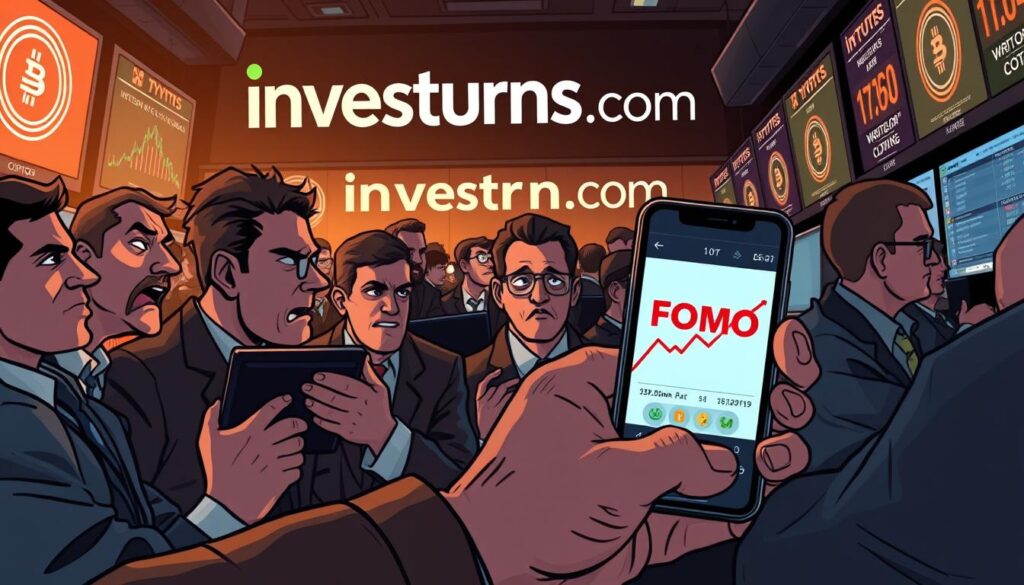
Impulsive Moves vs. Disciplined Choices
Many traders abandon strategy when prices spike. They make impulsive decisions, buying assets at peak values only to sell during corrections. Consider Dogecoin’s 2021 surge: prices climbed 12,000% before crashing 80% within weeks after Elon Musk’s SNL appearance.
Disciplined approaches avoid this trap. Successful traders:
- Set predefined entry/exit points
- Verify project fundamentals before buying
- Ignore artificial deadlines like “24-hour sales”
The Role of Scarcity Mindset and Market Volatility
Market volatility amplifies the fear of missing limited-time opportunities. Platforms exploit this by highlighting countdown timers and “last chance” alerts. These tactics create false urgency, pushing traders toward risky bets.
Scarcity thinking also distorts risk assessment. Investors focus on potential gains while ignoring warning signs. During crypto booms, many overlook red flags like:
- Lack of real-world use cases
- Overreliance on celebrity endorsements
- Absence of developer activity
This combination of market volatility and rushed decisions often leads to preventable losses. The solution lies in slowing down—treating each choice as deliberate rather than urgent.
FOMO, JOMO, investment discipline, patience, selective investing

Modern traders face endless options in volatile markets. A counterintuitive approach gains traction: finding confidence in not acting. This philosophy transforms anxiety about missed chances into clarity through intentional filtering.
Consider how top performers operate. They follow strict criteria rather than chasing every trend. One study found professionals review 100+ opportunities before selecting three. This quality-first method reduces exposure to shaky ventures.
| Decision Trigger | FOMO Approach | Strategic Omission |
|---|---|---|
| Market Hype | Impulsive entry | Criteria checklist |
| Peer Activity | Copycat moves | Goal alignment check |
| Price Spikes | Chasing peaks | Historical pattern analysis |
Building this mindset starts with clear rules. Define what makes an opportunity viable: team credentials, use cases, or liquidity thresholds. Document these standards to avoid emotional exceptions.
Time becomes an ally rather than an enemy. Waiting allows verification of claims and tracking of sustainable growth patterns. As Warren Buffett notes: “The stock market transfers money from the active to the patient.”
“Successful traders miss more deals than they take – that’s how they win.”
Practical implementation involves three steps:
- Create a 5-point viability checklist
- Set weekly review periods for new options
- Track avoided “opportunities” and their outcomes
This method cultivates confidence through restraint. It turns market noise into a filterable signal, aligning actions with long-term objectives rather than fleeting impulses.
Strategies for Building a Patient Investment Approach

Building lasting wealth requires shifting from reactive moves to deliberate systems. Unlike chasing fleeting trends, this method relies on time-tested principles that compound gains while minimizing emotional interference.
Embracing Long-Term Growth Engines
Index funds act as market anchors, spreading risk across hundreds of assets. For example, the S&P 500 has delivered 10% average annual returns since 1926. This “set-and-forget” tool lets markets work while you focus on life.
“Someone’s sitting in the shade today because someone planted a tree a long time ago.” – Warren Buffett
Automation: Your Silent Partner
Consistency trumps timing. Tools like automatic transfers turn saving into a habit, not a chore. Benefits include:
- Dollar-cost averaging during price swings
- Removing impulse decisions from the equation
- Aligning contributions with paycheck cycles
Compound growth amplifies these efforts. $500 monthly at 7% interest becomes $467,000 in 25 years. Estate planning integrates naturally, as automated systems continue benefiting heirs without constant oversight.
Real-World Examples and Success Stories
History offers clear proof that steady strategies outlast hype-driven chaos. Let’s examine how iconic figures and market events reveal the power of measured approaches.
Warren Buffett’s Journey: A Testament to Patience
At 21, Buffett’s net worth mirrored many college graduates today—around $20,000. His secret? Letting compound growth work while others chased quick wins. By sticking to value-focused picks, 99% of his $117 billion fortune accumulated after age 50.
“The stock market is designed to transfer money from the active to the patient.”
Crypto Market Case Studies and Lessons Learned
Dogecoin’s 2021 rollercoaster shows hype’s dangers. Prices surged 12,000% before Musk’s SNL joke triggered an 80% crash. Many bought near peaks, mistaking viral moments for sustainable value.
| Strategy | Dogecoin Buyers | Buffett-Style Investors |
|---|---|---|
| Entry Point | Peak hype cycles | Fundamental analysis |
| Holding Period | Days/weeks | Decades |
| Outcome | Average 65% loss | 10,000%+ gains |
Groupon’s tactics reveal how businesses exploit urgency. Their countdown timers pushed rushed purchases—94% of users admitted buying deals they later regretted.
Key lessons from these stories:
- Virality ≠ Value: Trending assets often lack staying power
- Scarcity traps: Artificial deadlines cloud judgment
- Time arbitrage: Waiting reveals true opportunities
These examples prove that resisting frenzy creates lasting advantages. As Buffett shows, wealth grows quietly—not through loud market noise.
Conclusion
The true challenge in modern trading isn’t action, but purposeful restraint. Feeling tempted by quick gains is natural, especially when social media amplifies every market move. Investors often face a flood of “can’t-miss” opportunities, but lasting success comes from sticking to a clear plan.
Creating guardrails against hype starts with awareness. Limit exposure to sensationalized media feeds that prioritize clicks over facts. Instead, focus on aligning choices with long-term goals. This approach turns time into an asset rather than a source of pressure.
A well-defined strategy acts as a compass in chaotic markets. By filtering information through personal criteria—not crowd reactions—investors avoid costly detours. Remember: every skipped trend creates space for meaningful opportunities that match your objectives.
The market will always test resolve with shiny distractions. Yet those who master their responses build portfolios that thrive through cycles. It’s not about ignoring fear of missing out—it’s about making that fear work for your goals, not against them.
FAQ
How does FOMO influence crypto trading behavior?
Fear of missing out often drives traders to chase rapid price surges without research, leading to impulsive buys during hype cycles. This emotional response can override logical analysis, increasing exposure to volatile or unsustainable assets.
What practical steps reduce FOMO-driven decisions?
Setting predefined criteria for trades, using dollar-cost averaging through platforms like Coinbase, and avoiding real-time social media chatter during market spikes help maintain objectivity. Tools like portfolio trackers from Blockfolio provide data-driven insights over emotional reactions.
Why do index funds align with a JOMO mindset?
Broad-market ETFs from providers like Vanguard or BlackRock inherently diversify risk, eliminating the need to chase individual asset trends. This passive strategy prioritizes steady compounding over speculative bets, aligning with long-term wealth-building principles.
How did Warren Buffett’s philosophy counter investment FOMO?
Buffett’s Berkshire Hathaway focuses on undervalued companies with strong fundamentals, often avoiding trendy markets. His adherence to value investing principles during the 2000 dot-com bubble crash exemplifies how patience outperforms short-term speculation.
Can automation improve crypto investment discipline?
Yes. Scheduled recurring purchases on exchanges like Kraken or Gemini enforce consistency, reducing emotional reactions to price swings. Automated rebalancing tools also help maintain target allocations without manual intervention.
What red flags indicate FOMO-driven crypto projects?
Projects emphasizing urgency (“limited-time offers”), lacking transparent whitepapers, or relying solely on influencer endorsements often carry higher risks. Platforms like Etherscan help verify blockchain transaction legitimacy before committing funds.

