

A decade-old cybercrime tactic now threatens modern digital assets. Criminals manipulate telecom systems by hijacking phone numbers, bypassing even advanced protections. This method exploits outdated carrier protocols, turning a basic service into a gateway for financial theft.
Federal data reveals alarming growth. The FBI reported 1,611 cases in 2021, with losses topping $68 million. High-profile victims include tech leaders like Twitter’s former CEO, whose social media account was compromised through this scheme. These incidents show how trust in communication networks becomes a weakness when exploited.
Attackers use psychological manipulation more than technical skills. They convince service representatives to transfer numbers to unauthorized devices. Once control shifts, passwords reset, bank accounts drain, and digital identities crumble. The 2019 Dorsey case proved no one is immune.
This threat merges old-school deception with digital consequences. Criminals target the link between users and providers, often bypassing encryption and firewalls. Protection requires understanding both social engineering tactics and carrier vulnerabilities.
Key Takeaways
- FBI data shows 1,611 reported cases in 2021 with $68 million losses
- High-profile victims include corporate executives and tech leaders
- Relies on manipulating telecom employees rather than hacking systems
- Bypasses advanced protections by targeting phone number ownership
- Requires combined personal vigilance and industry protocol updates
Understanding SIM Swapping and Its Impact
A growing threat leverages personal data and carrier weaknesses to drain financial resources. This scheme, often called SIM hijacking, transforms basic mobile services into tools for large-scale fraud. Criminals bypass digital safeguards by targeting the relationship between users and their communication providers.
What Is SIM Swacking?
In this scheme, criminals convince carriers to redirect a phone number to their device. They start by collecting birthdates, addresses, or partial social security numbers through phishing emails or dark web purchases. With these details, they impersonate legitimate customers during carrier interactions.
Once the transfer completes, the attacker receives all calls and texts meant for the victim. This includes verification codes sent via SMS, granting immediate access to email, banking, and cryptocurrency accounts. The 2020 BlockFi breach demonstrated this risk when $10 million in crypto vanished after a single compromised number.
Real-World Impact and Case Studies
Financial institutions aren’t the only targets. A 2021 attack on a Fortune 500 executive enabled $2.8 million in unauthorized stock trades. Lawsuits reveal carriers often lack protocols to verify unusual transfer requests, making employees easy targets for manipulation.
| Year | Case | Loss |
|---|---|---|
| 2019 | Tech CEO social media takeover | $250k in fraudulent posts |
| 2020 | Crypto exchange breach | $10 million stolen |
| 2022 | Bank executive fraud | $1.4 million transferred |
These incidents highlight how publicly available information becomes weaponized. Attackers combine data fragments from LinkedIn profiles, property records, and old passwords to build convincing fake identities. One criminal group reportedly earned $100 million before arrest by exploiting this method across 50+ carriers.
The Mechanics Behind SIM Swapping Attacks
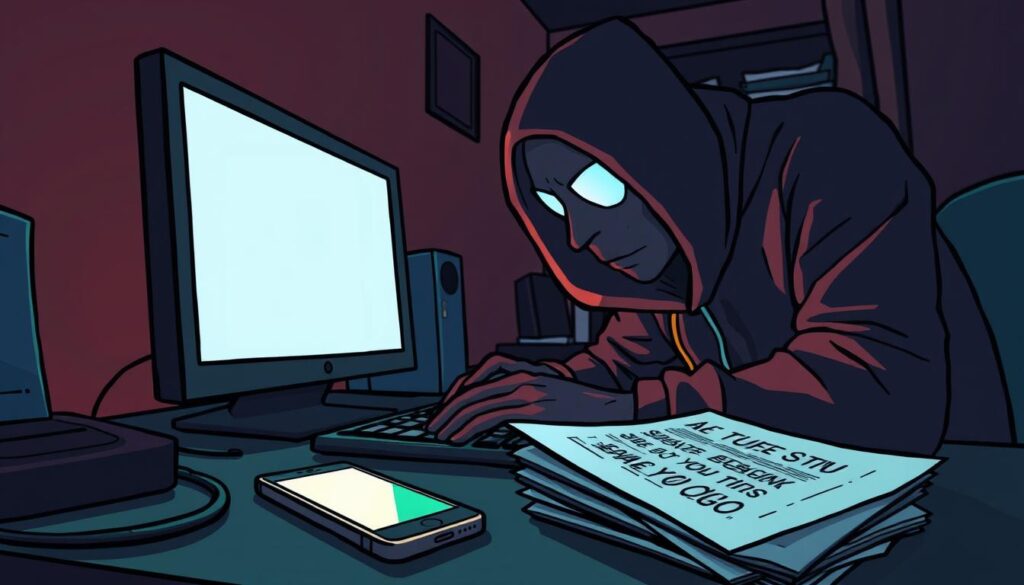
Criminals don’t hack systems—they hack people. This truth lies at the core of modern digital heists, where manipulation trumps technical prowess. Attackers exploit human psychology and organizational gaps to reroute critical communications.
Social Engineering Techniques
Fraudsters craft stories that pressure telecom staff into compliance. One common approach involves impersonating distressed customers:
- “My phone fell in a river—I need service restored NOW!”
- “I’m a doctor on call—delay could kill patients!”
These scripts leverage authority bias and manufactured urgency. The group Scattered Spider refined this method, using SMS phishing lures to gather employee trust before requesting number transfers.
Exploiting Carrier Vulnerabilities
Telecom providers often use outdated verification methods. A 2023 study found 41% of carriers still accept partial Social Security numbers for identity checks. Attackers exploit these gaps using:
- Public records from data brokers
- Leaked employment histories
- Social media activity patterns
One criminal collective reportedly compromised 17 regional providers by claiming “account ownership disputes” during night shifts when experienced supervisors were unavailable. This highlights how procedural weaknesses enable digital theft.
Recognizing the Warning Signs of a SIM swap Attack
Digital heists often begin with silent alarms most users miss. These red flags surface through disruptions in daily connectivity and abnormal digital patterns. Immediate recognition can prevent irreversible damage to financial and online identities.
Service Disruptions and Unexpected Loss of Signal
Your device suddenly loses network bars in familiar locations. Calls drop mid-conversation. Texts stop arriving—including time-sensitive verification codes from banks. This radio silence often indicates unauthorized transfers of your mobile service.
| Scenario | Indicators | Immediate Actions |
|---|---|---|
| Signal loss | No service in strong coverage zones | Contact carrier via secure channel |
| Missing alerts | Bank messages stop abruptly | Check accounts through alternate devices |
| Account lockouts | Password reset emails flood inbox | Freeze financial transactions |
Unusual Account Activity and Alerts
Simultaneous login attempts across multiple platforms raise alarms. Watch for:
- Password reset confirmations you didn’t request
- Unrecognized charges on your phone bill
- Carrier notifications about “recent changes”
One victim reported receiving 37 authentication codes within 90 minutes before losing $23,000. Such activity spikes demand instant verification through secondary communication methods.
Strengthening Two-Factor Authentication for Better Account Security
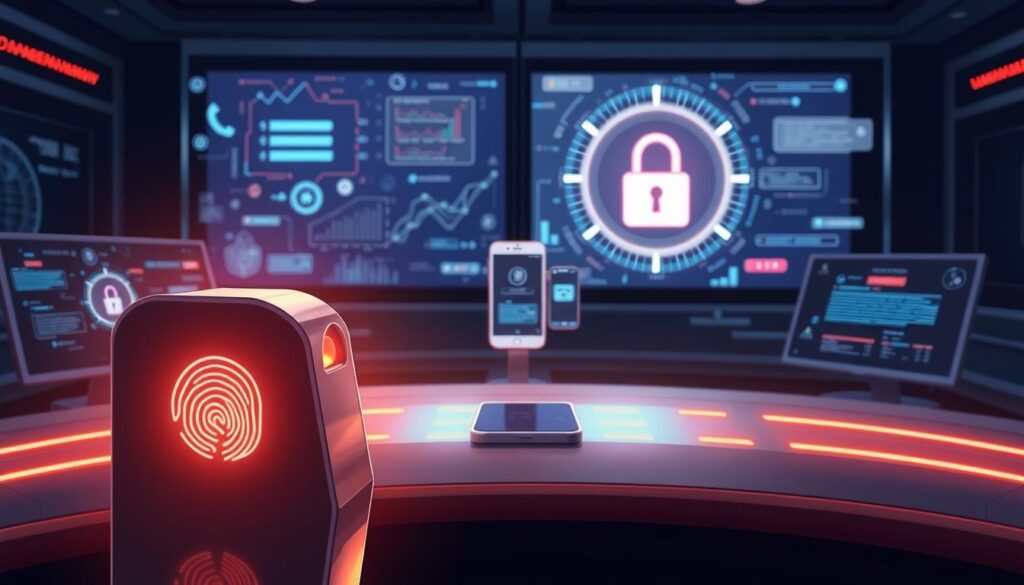
What if your strongest defense becomes your weakest link? Traditional SMS verification creates a false sense of safety by relying on easily intercepted text messages. Attackers bypass this layer instantly when they control your phone number.
Why SMS Verification Fails
Text message codes travel through cellular networks vulnerable to interception. A 2023 study showed 83% of account breaches involved compromised SMS-based systems. Once criminals redirect your number, they receive all verification texts meant for you.
Modern Protection Tools
Authenticator apps generate codes offline using time-based algorithms. Popular options include:
- Google Authenticator (100M+ downloads)
- Microsoft Authenticator (iOS/Android)
- Password manager integrations
| Method | Security Level | Ease of Use |
|---|---|---|
| SMS Codes | Low | High |
| Authenticator Apps | High | Medium |
| Hardware Keys | Maximum | Low |
| Biometrics | High | High |
Physical security keys like YubiKey require device insertion for access. Banks like Chase now support these USB devices for high-risk transactions. Biometric systems add fingerprint or facial checks during login attempts.
Financial institutions report 72% fewer breaches after switching to app-based verification. Update your critical accounts first—email providers and banking portals—then expand to other services.
Preventative Measures to Combat SIM swap
Your mobile number acts as a master key to digital life. Proactive defense requires locking down both device access and carrier protocols. Start by treating your phone service as critical infrastructure—because criminals certainly do.
Establishing Robust Carrier Safeguards
Contact your provider immediately to activate three shields:
- Port freeze: Blocks unauthorized number transfers
- Account-specific PINs changed quarterly
- Voice recognition for service changes
Major operators like Verizon and AT&T now offer “transfer locks” through their apps. One user prevented three hijacking attempts in 2023 using these tools.
Implementing Strong, Unique Passwords
Random phrases beat complex characters. Think “PurpleTigerRides@Dawn” instead of “P@ssw0rd123”. Password managers generate and store these codes securely—never reuse them across sites.
“A 12-character random password takes 3,000 years to crack. Your pet’s name? About 3 minutes.”
Enable biometric checks where available. Pair fingerprint scans with physical security keys for high-value accounts. This layered approach creates multiple failure points for attackers.
Enhancing Personal Security in a Digital World
Human behavior remains the strongest firewall against digital threats. Cybersecurity experts report that 74% of breaches start with manipulated individuals rather than hacked systems. This reality demands smarter approaches to information sharing and verification practices.
User Education and Awareness Training
Effective defense begins with recognizing manipulation patterns. Quarterly workshops help teams identify:
- Phishing emails mimicking corporate communication styles
- Urgent requests for sensitive data verification
- Fake tech support calls requesting remote access
Financial institutions like Bank of America reduced fraud attempts by 63% after implementing scenario-based training. Employees learn to verify unusual requests through approved channels before acting.
Adopting Multi-Layered Security Strategies
Combine technical controls with behavioral adjustments for maximum protection. The FCC now mandates stricter carrier verification processes, but personal vigilance remains critical:
- Review social media profiles for exposed birthdates/pet names
- Use pseudonyms for online accounts unrelated to legal identity
- Enable activity alerts across all financial platforms
One cybersecurity firm found that limiting location-sharing data decreased successful phishing attempts by 41%. Treat every digital interaction as potential reconnaissance for future attacks.
Advanced Strategies for Robust Digital Protection
Digital fortresses require more than virtual walls in today’s threat landscape. Enterprises now deploy military-grade safeguards that combine physical hardware with behavioral analytics. These solutions address vulnerabilities traditional methods miss.
Utilizing Physical Security Keys and Biometrics
Hardware tokens like YubiKey and RSA SecurID create uncrackable authentication barriers. Unlike SMS codes, these devices generate unique cryptographic signatures that expire instantly. Financial institutions report 89% fewer breaches when using these tools.
| Solution | Adoption Rate | Breach Reduction |
|---|---|---|
| USB Security Keys | 47% of Fortune 500 | 92% |
| Fingerprint Scanners | 68% mobile users | 84% |
| Voice Authentication | 22% banks | 79% |
Biometric systems add physiological verification layers. Apple’s Face ID and Windows Hello use 3D mapping to prevent photo spoofing. Voice recognition analyzes 100+ speech characteristics for bank call centers.
Continuous Monitoring and Incident Response
Real-time surveillance detects anomalies before damage occurs. Automated systems track:
- Unusual login locations
- Multiple failed verification attempts
- Sudden changes to carrier settings
Financial firms using AI-driven monitoring blocked 214,000 potential attacks in 2023. Immediate response protocols include:
- Freezing all connected payment cards
- Revoking active sessions across devices
- Issuing hardware-based identity confirmations
One global bank recovered 97% of stolen funds through these methods within 72 hours. Regular penetration testing ensures defenses evolve faster than criminal tactics.
Conclusion
Digital defenses crumble when trust becomes the weakest link. Modern criminals exploit this reality through phone number vulnerabilities, turning basic communication tools into weapons. These schemes highlight why outdated verification methods require urgent upgrades across industries.
Protection demands three actions: freeze carrier transfers, replace SMS codes with app-based verification, and monitor financial activity daily. Financial institutions now offer biometric checks and hardware tokens like YubiKey – tools that block 89% of unauthorized access attempts.
If targeted, act within minutes. Contact providers using pre-established backup codes and demand number reclamation. Alert credit bureaus and banks to freeze transactions. Document every detail for law enforcement reports.
Last year’s $214,000 average loss per incident proves no one gets a second chance. Update carrier PINs quarterly, scrub social media of personal details, and treat mobile services like vault doors. Survival in this landscape requires constant evolution – both in technology and user habits.
FAQ
How does SIM swapping work?
Criminals trick mobile carriers into transferring a victim’s phone number to a new SIM card. Once they control the number, they intercept verification codes, reset passwords, and hijack accounts linked to that number.
What are the red flags of a potential SIM swap attempt?
Sudden loss of cellular service, unexpected password reset emails, or unauthorized transactions in bank accounts. Check for unrecognized devices in your Google or Apple account activity logs.
Why should I avoid SMS for two-factor verification?
Text messages can be intercepted if attackers take over your phone number. Use app-based methods like Google Authenticator or hardware keys like YubiKey, which aren’t tied to your carrier.
How do attackers exploit telecom company weaknesses?
They impersonate victims using stolen personal data, such as Social Security numbers, to convince support agents to activate a new SIM card. Some carriers lack strict identity checks, making fraud easier.
Can biometrics prevent account takeovers?
Fingerprint or facial recognition adds a layer of protection. Combined with physical security keys, biometrics make it harder for hackers to bypass login barriers even if they hijack your number.
What safeguards should I set up with my mobile carrier?
Request a port-freeze on your account and set a unique PIN or passphrase. Verizon and AT&T offer enhanced security features like Number Lock to block unauthorized SIM changes.
How does user education reduce SIM swap risks?
Training helps people recognize phishing tactics, avoid sharing sensitive data online, and monitor accounts for suspicious activity. Awareness is critical to stopping social engineering attacks.
What steps should I take if I’m targeted?
Immediately contact your carrier to reclaim your number, freeze financial accounts, and report the incident to the FTC. Enable backup authentication methods for email and banking apps.

