

Say Goodbye to the Paper Diploma: Your Degree is Getting a Digital Upgrade
Remember that feeling? You walked across the stage, shook a hand, and received that fancy, embossed piece of paper. Your diploma. You probably framed it, or maybe it’s tucked away in a folder somewhere safe. But what happens when you actually need to *use* it? You apply for a new job, and the hiring manager asks for proof of your degree. The scramble begins. You have to find it, maybe get it notarized, or worse, contact your university’s registrar and wait weeks for them to send an official transcript. It’s slow, clunky, and feels ridiculously outdated in our digital-first world. This is where the conversation about blockchain for verifiable credentials gets really exciting.
Forget everything you think you know about blockchain being just for cryptocurrencies. We’re talking about a fundamental shift in how we prove who we are and what we’ve accomplished. It’s about taking back control of our most important documents—our degrees, our certifications, our licenses—and making them instantly verifiable, completely secure, and entirely ours. This isn’t a far-off futuristic idea; it’s happening right now, and it’s poised to make that paper diploma a relic of the past.
Key Takeaways
- Ownership and Control: Blockchain allows individuals to truly own and control their digital diplomas and credentials, storing them in a personal digital wallet.
- Fraud Prevention: The immutable nature of blockchain makes it nearly impossible to forge or alter academic records, drastically reducing degree fraud.
- Instant Verification: Employers and other institutions can verify a credential in seconds, not weeks, by checking it against the public blockchain record.
- Self-Sovereign Identity (SSI): This technology is a cornerstone of SSI, an identity model where individuals manage their own digital identity without relying on centralized authorities.
- Beyond Diplomas: The same principles apply to any credential, from professional certifications and licenses to micro-credentials and online course completions.
The Cracks in the Current System
Let’s be honest, the current system for managing academic credentials is broken. It’s a patchwork of paper, PDFs, and siloed university databases. This creates a host of problems we’ve all just come to accept as normal.
The Forgery Problem is Real
Diploma mills are a multi-million dollar industry. It’s shockingly easy for someone to buy a fake degree online that looks incredibly convincing. For employers, sifting through these fakes is a costly and time-consuming background check process. A simple PDF of a diploma is easily edited with basic software. There’s no built-in way to trust a digital file without a rigorous, manual verification process.
The Agony of Verification
You’ve been there. You get a great job offer, but it’s contingent on a background check that includes educational verification. You fill out a form, provide your details, and then… you wait. The third-party verification service has to contact your university. The registrar’s office, often understaffed, has to dig through their records, print something out, stamp it, and mail it. The whole process can take days or even weeks, potentially delaying your start date. It’s inefficient for everyone involved—you, the employer, and the university.
You Don’t Actually Own Your Record
Think about it. Who holds the master copy of your academic achievement? Your university does. You have a copy (the diploma), but the source of truth resides in their database. If you need it, you have to ask for it. You pay for transcripts. If the institution were to somehow lose its records or shut down, proving your education could become a nightmare. You earned it, you paid for it, but you don’t truly control it.

Enter Blockchain: The Digital Notary We’ve Been Waiting For
When people hear “blockchain,” their minds often jump straight to Bitcoin and volatile financial markets. But the underlying technology is what’s truly revolutionary. At its core, a blockchain is a distributed, immutable ledger. Let’s break that down in plain English.
- Distributed: Instead of being stored in one central place (like a single university server), the ledger is copied and spread across a vast network of computers. This means there’s no single point of failure. No single entity can control it or shut it down.
- Immutable: Once a piece of information (a “block”) is added to the chain, it’s cryptographically linked to the one before it. Changing it would require changing every subsequent block on thousands of computers simultaneously, which is practically impossible. It’s like digital stone; once something is carved in, it’s there forever.
This combination creates a system of ultimate trust. You don’t need to trust a central authority like a university or a government because you can trust the math and the network. It’s this foundation of trust that makes blockchain for verifiable credentials so powerful.
So, What’s a “Verifiable Credential”?
It sounds technical, but the concept is simple. The World Wide Web Consortium (W3C) has established a standard for it. Think of it like a digital version of your driver’s license. It has three key players:
- The Issuer: This is the entity that grants the credential. For a diploma, this is the university.
- The Holder: This is you. You receive the credential and store it in your secure digital wallet (an app on your phone or computer).
- The Verifier: This is anyone who needs to confirm your credential, like a potential employer or another academic institution.
The magic is that the Verifier can check the credential’s authenticity without having to contact the Issuer directly. You, the Holder, present the proof, and the Verifier can instantly confirm that it was issued by the claimed university and hasn’t been tampered with. This is a game-changer.
How it Works: From Graduation to Job Offer
Let’s walk through the journey of a digital diploma on the blockchain. It’s a lot more straightforward than it sounds.
Step 1: The University (Issuer) Issues the Diploma
When you graduate, the university creates a digital file containing your diploma information: your name, degree, major, graduation date, etc. They then use their private cryptographic key to “sign” this file. This signature acts as a tamper-proof seal of authenticity. Finally, they don’t put the whole diploma on the blockchain (that would be bad for privacy!). Instead, they create a cryptographic hash—a unique, fixed-length fingerprint of the diploma data—and record that hash on the blockchain along with their public key. This entry essentially says, “University X issued a credential with this exact fingerprint at this exact time.”
Step 2: You (The Holder) Receive and Store It
The university sends the signed digital diploma file directly to you. You add it to your personal digital wallet. This wallet is an application you control, secured by your own private keys. Your diploma now lives on your device, not in a university database or a filing cabinet. You own it. You control it.
Step 3: The Employer (Verifier) Requests Proof
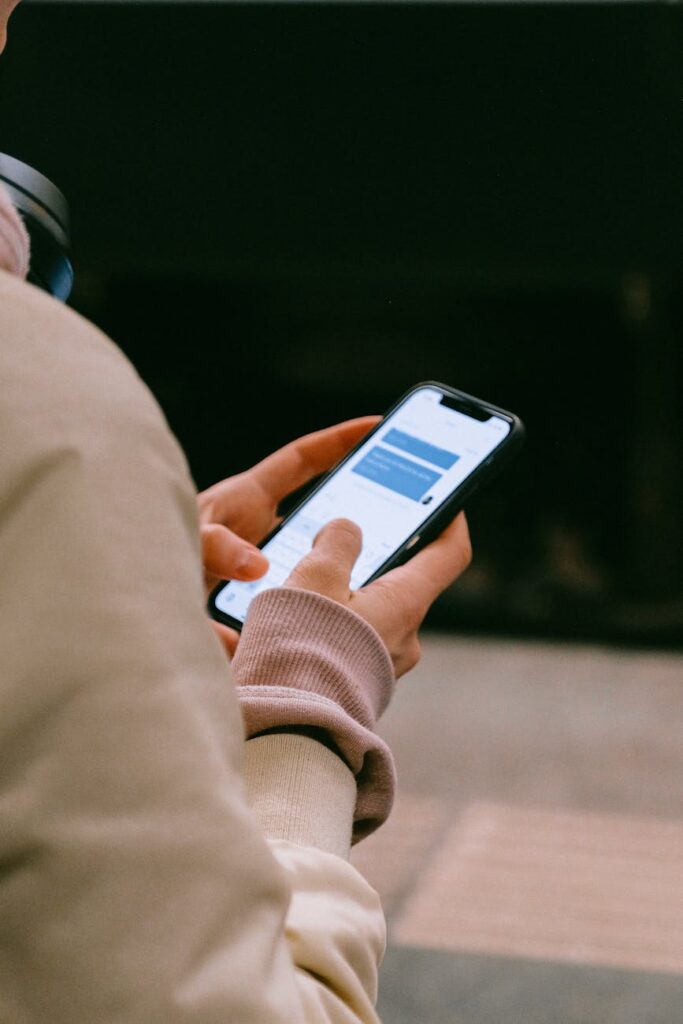
You’re applying for a job. The employer’s application portal has an option: “Verify Degree with Digital Credential.” You click it. Your digital wallet asks for your permission to share a “verifiable presentation” of your diploma with the employer. You’re not sending the whole file, just the necessary proof. You approve the request with a tap.
Step 4: Instant, Trustless Verification
Here’s where it all comes together. The employer’s system receives the presentation. It automatically performs two checks:
- It checks the digital signature on the credential using the university’s public key to confirm it was genuinely issued by them.
- It calculates the hash of the credential data and checks if that hash exists in the public record on the blockchain.
If both checks pass, the verification is complete. Instantly. The employer knows, with mathematical certainty, that you hold a valid, unaltered degree from that university. No phone calls, no emails, no waiting.
The Big Wins: Why This Revolution Matters
This isn’t just a technical upgrade; it’s a paradigm shift with profound benefits for individuals, institutions, and employers.
True Student Empowerment & Self-Sovereign Identity
This is the biggest win. The concept of Self-Sovereign Identity (SSI) means your identity is yours to control. Your academic history is part of that identity. With blockchain credentials, you’re no longer tethered to the institutions that issued them. You hold a complete, verifiable portfolio of your life’s achievements—your bachelor’s degree, a professional coding bootcamp certificate, an online course in project management, your CPR license—all in one secure place. You decide who sees what and when. It’s liberating.
“Self-Sovereign Identity is about moving the locus of control for our digital lives back to the individual. Verifiable credentials are the tools that make this possible, and blockchain is the anchor of trust that makes them work.”
Ironclad Security and an End to Fraud
The immutability of the blockchain is its superpower. Once a credential’s hash is on the chain, it cannot be altered. This makes degree fraud as we know it virtually obsolete. You can’t photoshop a blockchain record. You can’t buy a fake credential that will pass cryptographic verification. This brings a new level of trust and integrity to the entire hiring and education ecosystem.
Streamlined, Cost-Effective Operations
Think of the resources saved. Universities can automate the issuance process and drastically reduce the administrative burden on registrar’s offices. Employers can slash the time and money spent on third-party background checks. The efficiency gains are massive across the board. This allows people to focus on what matters: teaching, learning, and building great teams.
Lifelong Learning and Interoperability
The modern career path isn’t linear. People are constantly learning new skills. A digital wallet can hold “micro-credentials” for every skill you acquire. Because these credentials are based on open standards (like W3C’s), they are interoperable. A credential from MIT can sit right alongside one from Coursera and another from a local trade school, all verifiable in the same way. It creates a dynamic, lifelong transcript of your abilities.
Challenges on the Road Ahead
Of course, the path to widespread adoption isn’t without its bumps. There are legitimate challenges to address before this becomes the global standard.
- User Experience (UX): Managing cryptographic keys and digital wallets still feels complex for the average person. The industry needs to build incredibly simple, intuitive interfaces that make securing and sharing credentials as easy as using Apple Pay.
- Institutional Adoption: Universities can be slow-moving institutions. Getting global consensus and buy-in to migrate from legacy systems to a new, decentralized model takes time, effort, and clear demonstrations of value.
- Scalability and Cost: While newer blockchains are much more efficient, transaction fees and processing speeds can still be a concern for issuing credentials at a massive scale. Choosing the right blockchain platform is a critical decision.
- Digital Divide: We must ensure that a move to digital-only credentials doesn’t exclude individuals with limited access to technology or the internet. There must be accessible, non-digital off-ramps and support systems.

Conclusion: The Degree of the Future is Here
The paper diploma hanging on your wall is a symbol of a bygone era. It represents a system built on centralized trust, manual processes, and physical objects. The future of academic and professional achievement is digital, decentralized, and individually owned. The use of blockchain for verifiable credentials isn’t just about making things faster or more secure; it’s a fundamental re-architecting of trust and identity for the digital age.
It’s about a world where your accomplishments travel with you, in your pocket, ready to be proven at a moment’s notice. It’s a world with less fraud, less friction, and more individual empowerment. The transition is already underway, with pioneering institutions like MIT and the University of Melbourne leading the charge. Soon, asking a registrar for a transcript will feel as quaint as sending a fax. The real question isn’t if your diploma will become a verifiable credential, but how soon you’ll be adding it to your new digital wallet.

