

Can We Still Believe What We See? How Blockchain and AI Are Colliding to Rebuild Trust
We’re living in a truly wild time. Artificial intelligence can now write a poem, compose a symphony, or paint a masterpiece in the style of Van Gogh in mere seconds. It’s incredible. But there’s a flip side, a shadow that’s growing longer every day. For every amazing piece of AI art, there’s a deepfake video of a politician saying something they never said. For every helpful AI-written summary, there’s a torrent of sophisticated, AI-generated fake news designed to mislead. The line between real and artificial is getting blurrier than a Monet painting. This brings us to the billion-dollar question: How can we trust anything anymore? The answer might just come from another groundbreaking technology. The role of blockchain in verifying AI-generated content isn’t just a niche, nerdy concept anymore—it’s fast becoming a critical conversation about the future of truth itself.
Key Takeaways
- The Problem: The rapid rise of generative AI has made it incredibly easy to create convincing but fake content (deepfakes, misinformation), eroding public trust.
- The Solution: Blockchain offers a decentralized, immutable, and transparent ledger to create a permanent record of a piece of content’s origin and history.
- How It Works: By creating a unique digital fingerprint (a hash) of content and recording it on the blockchain with a timestamp, we can prove that a file is authentic and hasn’t been altered.
- Key Applications: This technology is vital for journalism (verifying news sources), digital art (proving ownership and authenticity), and legal sectors (securing documents).
- The Hurdles: Significant challenges remain, including scalability, cost, user experience, and the fact that blockchain verifies a file’s integrity, not its inherent truthfulness.
The Problem: Our Digital Reality is Under Siege
It used to be simple. Seeing was believing. A photograph was a moment captured in time. A video recording was evidence. That’s just not the case anymore. Generative AI tools have democratized the ability to manipulate reality on a scale we’ve never seen before. You don’t need a Hollywood CGI studio to create a believable fake; you just need a decent laptop and an internet connection. Think about it. We’ve seen AI-generated images of famous figures in situations that never happened win photography awards. We’ve heard AI-cloned voices of CEOs used in sophisticated phishing scams. This isn’t science fiction. It’s happening right now.
This creates a massive trust deficit. If a journalist posts a video from a conflict zone, how do we know it hasn’t been subtly altered? If a scientist publishes a data set, how can we be sure it’s the original? This erosion of trust has profound consequences for everything from our political discourse to our legal systems. It’s a digital fog of war, and we’re all caught in it. We need a lighthouse. We need a system that can anchor a piece of content to its origin, creating an unbreakable chain of custody. A way to prove, without a shadow of a doubt, that what you’re looking at is the *real thing*.
What is Blockchain, Anyway? A Quick, No-Nonsense Refresher
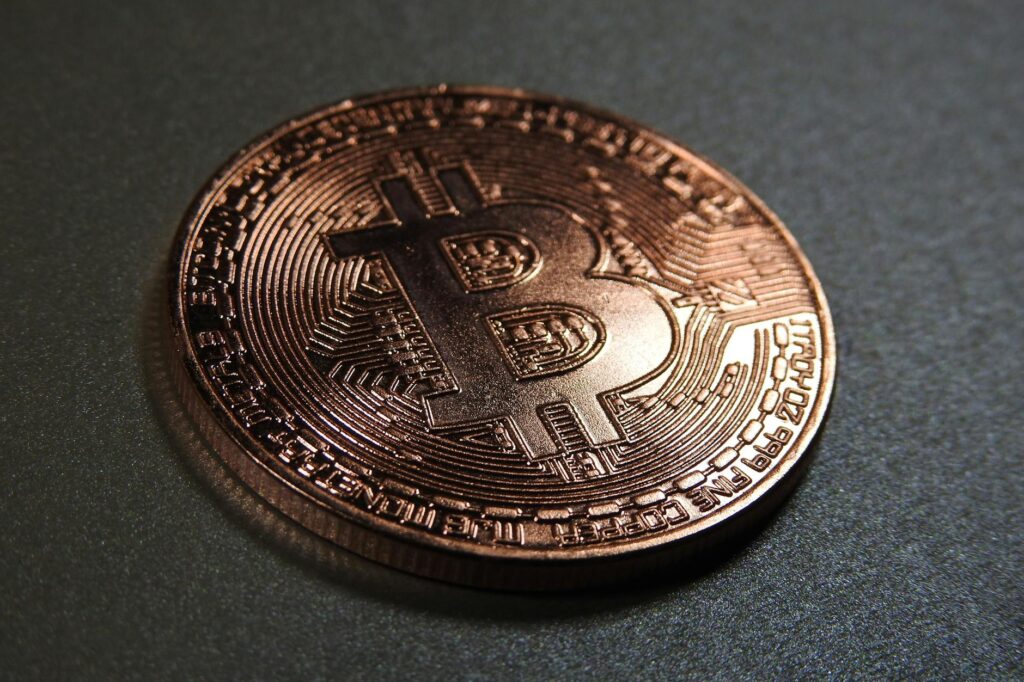
When you hear ‘blockchain’, your mind probably jumps to cryptocurrencies like Bitcoin. That’s fair, but it’s like thinking of the internet as just a tool for email. The real innovation is the underlying technology. So, let’s forget about crypto for a second and just focus on the core idea. Imagine a shared, digital notebook.
- It’s public and transparent: Thousands of people around the world have an identical copy of this notebook. Everyone can see what’s written in it.
- It’s append-only: You can only add new pages (or ‘blocks’) to the end of the notebook. You can’t go back and change or erase what’s already been written. It’s immutable.
- It’s secure and decentralized: Because so many people have a copy, you can’t just sneak in and change one person’s notebook. To alter the record, you’d have to change thousands of copies simultaneously, all over the world, which is practically impossible.
That’s it. At its heart, a blockchain is a highly secure, shared, and permanent record-keeping system that isn’t controlled by any single person or company. It’s a machine for creating trust in a digital world where trust is scarce.

How Blockchain in Verifying AI Content Actually Works
Okay, so we have this powerful digital notebook. How does that help us verify an AI-generated photo or a news article? It’s a surprisingly elegant process that boils down to creating a unique, tamper-proof ‘birth certificate’ for every piece of content. Let’s break it down.
Step 1: The Digital Fingerprint (Hashing)
The first step is to give our piece of content—be it an image, video, audio file, or document—a unique identity. This is done through a process called cryptographic hashing. It sounds complicated, but the concept is simple. A hashing algorithm is a function that takes your file and crunches it down into a short, fixed-length string of letters and numbers. For example, ‘A1c9F7b3…’.
This hash is like a digital fingerprint. It has a few magical properties:
- It’s unique: Every file will produce a different hash. The original ‘Mona Lisa’ and a version where you change a single pixel will have completely different fingerprints.
- It’s one-way: You can’t use the fingerprint to recreate the original file. It’s a one-way street.
- It’s deterministic: The same file will always produce the exact same fingerprint, every single time.
Step 2: Stamping it in Time (Timestamping)
Once you have this unique digital fingerprint, you record it on the blockchain. When you do this, the transaction gets added to a new ‘block’ along with a precise timestamp. This creates an immutable record that a specific piece of content (represented by its hash) existed at a specific moment in time. This is what experts call content provenance. It’s the digital equivalent of a notary stamping a document, but far more secure.
Now, let’s say a news agency captures a video. The moment it’s created, they can hash it and log that hash on the blockchain. Later, when you’re watching that video on a social media site, a simple tool (perhaps built into your browser one day) could automatically hash the video you’re seeing and check if that hash exists on the blockchain. If it matches the one logged by the news agency, you have near-certainty that you’re watching the original, unaltered footage. If it doesn’t match? A big red flag goes up. Someone has tampered with it.
Step 3: The Automated Notary (Smart Contracts)
We can take this a step further with smart contracts. These are little programs that live on the blockchain and automatically execute when certain conditions are met. A smart contract could be designed to manage the entire lifecycle of a piece of content. For example, an artist could create a smart contract that registers their new digital artwork. The contract would hold the hash, the creator’s identity, and the creation date. It could even manage licensing rights automatically, transferring ownership if someone purchases it as an NFT (Non-Fungible Token). This automates the verification and management process, making it more efficient and removing human error.
Real-World Use Cases and Potential Applications
This isn’t just theoretical. The application of blockchain for content verification is already being explored and implemented in various high-stakes fields.
Journalism and Combating Fake News
This is arguably the most critical use case. Organizations like The New York Times have experimented with projects (like their News Provenance Project) to record metadata about photos and videos on a blockchain. This includes the time and location the photo was taken, who took it, and its edit history. This creates a transparent trail from the camera to the consumer, making it much harder for bad actors to inject manipulated media into the news cycle. Imagine a world where every piece of breaking news footage could be instantly verified. That’s a powerful blow against misinformation.
Protecting Digital Art and Creator IP
For artists, proving ownership of digital work has always been a nightmare. It’s too easy to right-click and save. Blockchain, particularly through NFTs, has provided a solution. By minting a piece of art as an NFT, the artist is essentially creating a blockchain-based certificate of authenticity. It proves they are the creator and tracks every time the piece is sold. While the NFT market has had its ups and downs, the underlying technology for verifying the authenticity and ownership of unique digital assets is revolutionary for creators.
Legal, Academic, and Corporate Integrity
Think about the importance of authenticity for legal contracts, scientific research papers, or sensitive corporate documents. By hashing a document and logging it on a blockchain, a law firm can prove that a contract hasn’t been altered since it was signed. A university can ensure that a submitted research paper is the original work and not plagiarized. A company can maintain an unimpeachable audit trail of its financial records. It provides a level of document security and integrity that is simply unmatched by traditional systems.
“Blockchain’s promise is to provide a single source of truth. In an age of digital deepfakes and rampant misinformation, that promise has never been more important. It’s not about replacing human judgment, but about giving it a reliable tool to work with.”
The Challenges and Hurdles We Can’t Ignore
Of course, this technology isn’t a magic wand that will instantly solve all our problems. There are significant, real-world challenges that need to be addressed before we see widespread adoption.
The Scalability and Speed Problem
Many blockchains, especially well-known ones like Bitcoin and Ethereum, can be slow and expensive. They can only process a limited number of transactions per second. Now, imagine trying to log every photo taken by every journalist in the world, every day. The sheer volume of data is immense. Newer, more efficient blockchains are being developed, but scaling this to a global level is a massive technical hurdle. The cost of ‘writing’ data to the blockchain (known as ‘gas fees’) can also be prohibitive for high-volume applications.
The ‘Garbage In, Garbage Out’ Principle
This is a crucial point to understand. Blockchain is fantastic at proving that data has not been *tampered with* since it was recorded. It is not, however, capable of judging the inherent truthfulness of that data in the first place. If a person creates a deepfake video and is the first one to register its hash on the blockchain, the system will only ‘prove’ that the authentic, original deepfake hasn’t been altered. It verifies provenance, not ground truth. Therefore, it needs to be combined with trusted sources—the blockchain entry is only as trustworthy as the person or organization who created it.
User Experience and Adoption
For this to work, it has to be invisible to the average person. Nobody is going to manually copy a file’s hash and check it on a block explorer. This functionality needs to be seamlessly integrated into the platforms we already use—our web browsers, social media apps, and camera software. Creating an intuitive and frictionless user experience is perhaps the biggest non-technical challenge. It has to ‘just work’ for people to use it.
Conclusion: Forging a New Contract with the Truth
The rise of generative AI has presented us with a paradox: a tool of immense creative potential that also poses a fundamental threat to our shared sense of reality. We can’t put the AI genie back in the bottle, nor should we want to. The answer isn’t to fear or ban the technology, but to build the guardrails that allow us to harness its power responsibly.
Blockchain offers one of the most promising frameworks for these guardrails. By providing a decentralized, tamper-proof system for establishing content provenance, it acts as a powerful counterbalance to the ease of digital forgery. It’s a tool that allows creators to prove their work is original, journalists to stand by their reporting, and all of us to have a better chance of distinguishing fact from fiction. The road ahead is long and full of challenges, but the path toward a more verifiable, trustworthy digital future is one we must walk.
FAQ
Can blockchain technology detect all deepfakes?
No, not directly. Blockchain’s primary role isn’t detection but verification. It can’t analyze a video and tell you if it’s a deepfake. Instead, it allows a trusted source (like a media company) to create an immutable record of an *original, authentic* video. Later, you can check the video you’re seeing against that record. If they don’t match, you know the video has been altered. So, it helps identify fakes by confirming the originals.
Isn’t this system too complicated for the average internet user?
It absolutely would be if users had to interact with it directly. The ultimate goal is for this verification process to happen seamlessly in the background. Think of the padlock icon in your browser that signifies an HTTPS connection. You don’t perform the complex cryptographic handshake yourself; the browser does it for you. The vision is for a similar system where content on a webpage is automatically checked against a blockchain record, and a simple icon (like a green checkmark) tells you if it’s verified.
Will this mean every single photo and video will have to be stored on a blockchain?
Definitely not. Storing large files like videos directly on a blockchain is incredibly inefficient and expensive. The system works by storing only the tiny, unique fingerprint (the hash) of the file on the blockchain, not the file itself. This is a very small amount of data. It’s also likely that this process would be reserved for high-stakes content where authenticity is critical, such as news reporting, legal documents, official government announcements, and high-value digital art, rather than every selfie or cat video.

