

The digital economy has reached a pivotal moment. Organizations built on blockchain now collectively manage over $30 billion in assets, reshaping how we think about financial opportunities. This shift represents more than just technological progress—it’s a new frontier for investors.
A small group of leading entities controls the majority of these resources. For example, one prominent group alone holds a treasury worth over $3 billion. This concentration creates unique dynamics, where a handful of players influence market trends and innovation.
Growth patterns reveal even more potential. Average annual increases of 45% since 2021 show these entities aren’t just surviving—they’re thriving. Smaller groups still manage meaningful resources, with typical holdings around $1.2 million.
Traditional investment strategies struggle here. Success requires understanding how blockchain enables transparency while bypassing conventional corporate frameworks. Investors must learn to assess risks and opportunities through this lens.
Key Takeaways
- Blockchain-based organizations collectively manage $30+ billion in assets
- Top entities control over 60% of total resources
- Yearly growth rates exceed 45% since 2021
- New evaluation methods needed for digital-native structures
- Transparency through distributed ledger technology changes risk analysis
Introduction to DAO Treasury Investment
The evolution of digital collaboration is rewriting financial playbooks. Blockchain-based groups now operate through collective decision-making, where every participant helps steer resource allocation. This model removes traditional hierarchies, creating systems where funds serve shared goals rather than centralized interests.
Setting the Stage for Organizational Value
These digital collectives manage resources differently than conventional companies. Instead of executives controlling budgets, token holders propose and vote on financial moves. Over 12,000 funding proposals were submitted globally in 2023, showing how communities actively shape their financial futures.
Understanding Resource Stewardship
The pooled assets in these systems serve two primary functions:
- Funding day-to-day operations and development
- Generating returns through strategic investments
This dual purpose creates unique challenges. Groups must balance short-term needs with long-term growth strategies. A well-structured approach often includes:
| Aspect | Traditional Model | Community-Driven Approach |
|---|---|---|
| Decision Speed | Weeks/Months | Days |
| Stakeholder Input | Limited | Global Participation |
| Fund Allocation | Top-Down | Proposal-Based |
Members use transparent voting mechanisms to approve budgets, ensuring alignment with group objectives. This method builds trust while maintaining financial agility. As one industry observer noted: “The real innovation isn’t the technology—it’s how people organize around shared resources.”
DAO Valuation, Treasury Management, Governance, Decentralized Finance
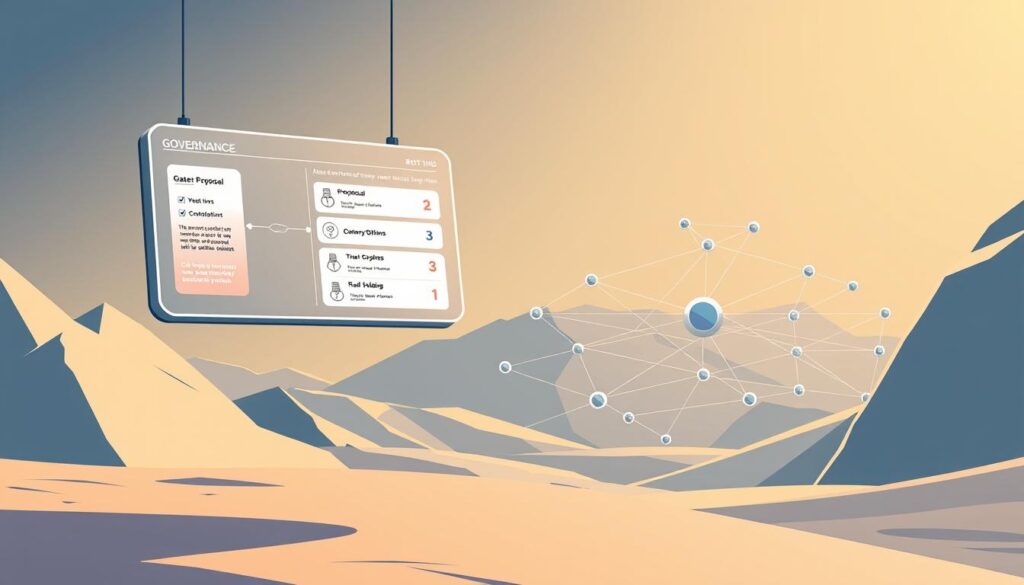
Blockchain collectives are redefining asset stewardship through community-driven frameworks. Unlike traditional institutions, these systems use transparent voting to allocate funds and shape strategies. Snapshot—hosting 80% of governance votes—powers most decisions, with 72% of proposals gaining approval despite only 15-25% member participation.
What These Terms Mean for Your Investment
Resource allocation here blends financial expertise with technological innovation. Off-chain platforms enable gasless voting for 70% of proposals, balancing speed with inclusivity. This approach impacts performance: groups with clear proposal guidelines often see 20% higher asset growth than peers.
Three factors determine operational success:
- Voter engagement thresholds aligning incentives
- Integration with yield-generating blockchain protocols
- Real-time treasury tracking through distributed ledgers
One industry report notes: “Effective systems convert passive token holders into active stewards.” Tools like multi-signature wallets and automated budget triggers help maintain stability while enabling agile responses to market shifts.
Fundamentals of DAO Treasury Valuation
Evaluating digital-native organizations requires rethinking traditional financial metrics. At the core lies asset composition – successful groups maintain 35% stablecoin allocations for operational stability while diversifying into growth-oriented holdings. This balance minimizes volatility without sacrificing upside potential.
Key Elements to Consider
Three factors dominate analysis:
- Liquidity depth: How quickly assets convert to cash equivalents
- Revenue streams: Protocol fees, staking yields, or service income
- Burn rate vs. runway: Months of operational coverage
Most groups follow a structured allocation pattern:
| Asset Class | Avg Allocation | Primary Purpose | Risk Level |
|---|---|---|---|
| Stablecoins | 35% | Operations | Low |
| Native Tokens | 28% | Growth | High |
| L1/L2 Assets | 22% | Ecosystem Alignment | Medium |
| Diversified Holdings | 15% | Risk Mitigation | Variable |
Market conditions heavily influence valuation multiples. As one analyst explains: “Digital-native balance sheets demand hybrid models – part venture capital, part hedge fund analysis.” Investors examine how groups adapt allocations during bear markets versus bull runs.
The evaluation process must account for unconventional factors like community contributions and unvested tokens. These elements often represent 20-40% of implied value in thriving organizations, though they lack traditional accounting recognition.
Essential Strategies for Effective DAO Treasury Management

Navigating digital asset ecosystems requires frameworks that blend discipline with adaptability. Leading blockchain collectives achieve resilience through three core principles: proactive planning, strategic diversification, and dynamic risk mitigation.
Financial Roadmapping Essentials
Forward-thinking groups implement budgeting systems that account for token volatility and shifting revenue streams. Key components include:
- Rolling 90-day cash flow projections
- Multi-signature approval processes for large expenditures
- Stablecoin reserves covering 6-12 months of operations
Balancing Growth and Stability
Top-performing collectives distribute assets across four categories:
| Category | Purpose | Allocation Range |
|---|---|---|
| Liquid Reserves | Operational buffer | 35-50% |
| Growth Assets | Long-term appreciation | 20-30% |
| Yield Generators | Passive income | 15-25% |
| Ecosystem Bets | Strategic partnerships | 5-10% |
This approach allows groups to capitalize on opportunities while maintaining stability. As one financial architect observes: “The best systems turn market turbulence into strategic advantage through prepared positioning.”
Risk mitigation tactics include automated stop-loss triggers and quarterly smart contract audits. Successful collectives allocate 5-10% of resources to contingency funds, ensuring readiness for regulatory shifts or liquidity crises.
Leveraging Tools and Technologies for DAO Treasury Management
Cutting-edge tools are reshaping asset handling in blockchain communities. Specialized systems now automate complex tasks while maintaining strict security standards. These solutions help groups operate efficiently at scale.
Treasury Automation Platforms
Leading platforms streamline financial operations through smart contracts. Gnosis Safe secures over $20 billion in digital assets using multi-signature approvals. Key features include:
- Automated payment schedules
- Real-time budget tracking
- Custom spending limits
| Platform | Key Features | Assets Managed |
|---|---|---|
| Gnosis Safe | Multi-sig security | $20B+ |
| Aragon | Governance integration | $1.5B+ |
Integration with DeFi Protocols
Decentralized networks enable yield generation through programmable strategies. Common approaches include:
- Liquidity pool participation
- Token staking programs
- Algorithmic rebalancing
| Strategy | Avg Return | Risk Level |
|---|---|---|
| Yield Farming | 8-15% APY | High |
| Staking | 3-7% APY | Medium |
Security remains critical when using these protocols. Regular smart contract audits and decentralized insurance options help protect assets. As one developer notes: “Automation creates efficiency, but human oversight ensures stability.”
Governance and Decision-Making Processes in DAO Treasuries
Trust forms the backbone of successful digital collectives. Blockchain-powered groups achieve this through radical transparency – every transaction remains permanently visible on public ledgers. This visibility transforms how communities handle financial matters, creating systems where accountability isn’t optional.
Transparency and Reporting Best Practices
Leading groups publish financial snapshots weekly. These reports detail:
- Asset allocations across currencies
- Recent expenditure approvals
- Upcoming budget votes
One collective reduced member disputes by 40% after implementing real-time dashboards. Their treasurer noted: “When people see funds moving daily, they focus on strategy – not suspicion.”
Optimizing Voting Mechanisms
Effective systems balance speed with inclusivity. Median voting windows last 5 days – enough for global participation without stalling progress. Key improvements include:
| Feature | Standard Model | Enhanced Approach |
|---|---|---|
| Quorum Threshold | 30% | Dynamic Adjustments |
| Voter Rewards | None | Token Incentives |
Groups using participation rewards see 2x higher engagement in financial decisions. However, safeguards prevent manipulation – votes from single entities rarely exceed 15% weight.
Delegation systems help streamline complex choices. Members can assign voting power to experts on specific topics while retaining control over major budget items. This hybrid model maintains democratic principles while accelerating critical decisions.
Risk Assessment and Mitigation in DAO Valuation
Protecting digital assets demands precision and foresight. Blockchain organizations face unique challenges where traditional risk models fall short. Let’s explore modern strategies to identify and neutralize financial threats.
Assessing and Quantifying Risk
Every investment carries potential pitfalls. The formula Risk = Probability × Loss helps quantify exposure. Communities use hybrid methods like:
- Failure Mode Analysis (FMEA) to map system vulnerabilities
- Scenario testing for market crashes or protocol failures
- Value-at-Risk (VaR) calculations adapted for token volatility
Common threat categories include:
| Risk Type | Impact | Mitigation |
|---|---|---|
| Smart Contract Bugs | Funds Loss | Third-Party Audits |
| Voting Manipulation | Decision Bias | Multi-Signature Wallets |
| Regulatory Shifts | Operational Halt | Legal Reserves |
Leading groups implement layered security. Multi-signature systems require 5+ approvals for large transactions. Platforms like InsureDAO cover 15-20% of assets against hacks.
Stress tests reveal weaknesses before crises strike. One collective survived a 70% market drop by maintaining:
- 40% stablecoin reserves
- Automated liquidation triggers
- Real-time portfolio dashboards
“Risk isn’t eliminated – it’s strategically contained through preparation.”
Insights from Real-World DAO Treasury Management
Real-world applications demonstrate the effectiveness of community-driven asset strategies. Two prominent groups offer actionable lessons in balancing scale with flexibility while maintaining member trust.
Case Studies from Leading Collectives
Uniswap’s resource pool surpasses $3 billion, supported by transparent voting systems. Their approach combines quarterly budget reviews with dynamic allocation adjustments, maintaining 40% liquidity buffers during market shifts.
BitDAO showcases diversification mastery through strategic ecosystem bets. Investments in infrastructure projects like zkSync demonstrate how groups fund innovation while preserving core assets. Their model allocates 15% to high-potential partnerships without compromising operational stability.
Scale presents unique challenges – top organizations collectively engage over 2 million stakeholders. Successful systems use layered communication tools, including real-time dashboards and proposal explainers. One lead architect notes: “Growth demands education – informed members make better financial decisions.”
These examples prove that collective stewardship works at any size. The key lies in aligning incentives, maintaining transparency, and adapting strategies as ecosystems evolve.
FAQ
How do decentralized autonomous organizations ensure transparency in financial operations?
Leading platforms like Aragon and DAOhaus use blockchain-based tools for real-time tracking of transactions. Public ledgers, smart contract audits by firms like OpenZeppelin, and community-driven reporting ensure accountability across every transaction.
What role do decentralized finance protocols play in asset diversification?
Platforms such as Uniswap and Balancer enable automated liquidity provision, while yield-generating strategies on Compound or Aave help balance risk. Diversifying across stablecoins, NFTs, and governance tokens reduces exposure to market volatility.
How can voting mechanisms impact investment outcomes in community-led funds?
Optimized governance models, like those used by MakerDAO, allow token holders to propose and vote on asset allocation. Transparent proposals and quadratic voting systems prevent concentration of power, aligning decisions with long-term growth.
What tools help mitigate security risks in digital asset management?
Multi-signature wallets like Gnosis Safe, combined with automated monitoring through Chainalysis, detect suspicious activity. Insurance protocols such as Nexus Mutual provide coverage against smart contract failures or exploits.
Why is liquidity critical for sustaining operations in blockchain-based organizations?
Sufficient liquidity ensures funds are available for development grants, community incentives, or emergency scenarios. Projects like Curve Finance optimize stablecoin pools, while Convexity boosts capital efficiency without sacrificing accessibility.
How do automation platforms streamline treasury workflows?
Solutions like Parcel (by Safe) automate payroll, budgeting, and expense tracking. Integrations with Snapshot for governance and CoinGecko for real-time pricing reduce manual errors and accelerate decision cycles.
What metrics indicate successful long-term value creation in tokenized ecosystems?
Metrics include protocol revenue growth (e.g., Ethereum’s burn rate), community participation rates, and treasury diversification ratios. Projects like Synthetix track staking rewards and collateral health to gauge sustainability.
How do leading communities handle regulatory uncertainty around digital assets?
DAOs like PleasrDAO collaborate with legal firms specializing in blockchain to structure compliant entities. Proactive measures include jurisdictional diversification and adhering to frameworks like FATF guidelines.

