

Market Sentiment Indicators: The Pulse of Crypto Investment
The Crypto Fear & Greed Index helps investors gauge market sentiment
Market sentiment often drives cryptocurrency prices before fundamentals catch up. Understanding the collective psychology of market participants provides investors with a powerful edge when timing entries and exits.
Fear & Greed Index: Emotional Temperature Check
The Crypto Fear & Greed Index aggregates multiple data points into a single 0-100 score, indicating whether the market is driven by fear (0-49) or greed (50-100). This indicator serves as a contrarian signal—extreme fear often presents buying opportunities, while extreme greed suggests caution.
Research shows that buying during “extreme fear” periods has historically yielded 30-40% returns within 3-6 months for Bitcoin investments. Conversely, “extreme greed” readings have preceded corrections 78% of the time.
Social Media Volume and Sentiment Analysis
Platforms like Twitter, Reddit, and Telegram provide real-time insights into market sentiment. Monitoring conversation volume and sentiment around specific cryptocurrencies can reveal potential price movements before they occur.
Tools like Santiment and LunarCrush quantify social engagement metrics, helping investors identify when coins are becoming over-hyped or unjustifiably ignored. These platforms analyze millions of social interactions daily to provide actionable investment intelligence.
Master Market Sentiment Analysis
Get our comprehensive guide to interpreting market sentiment indicators and leverage crowd psychology for smarter investment decisions.
Technical Analysis Metrics for Crypto Investment
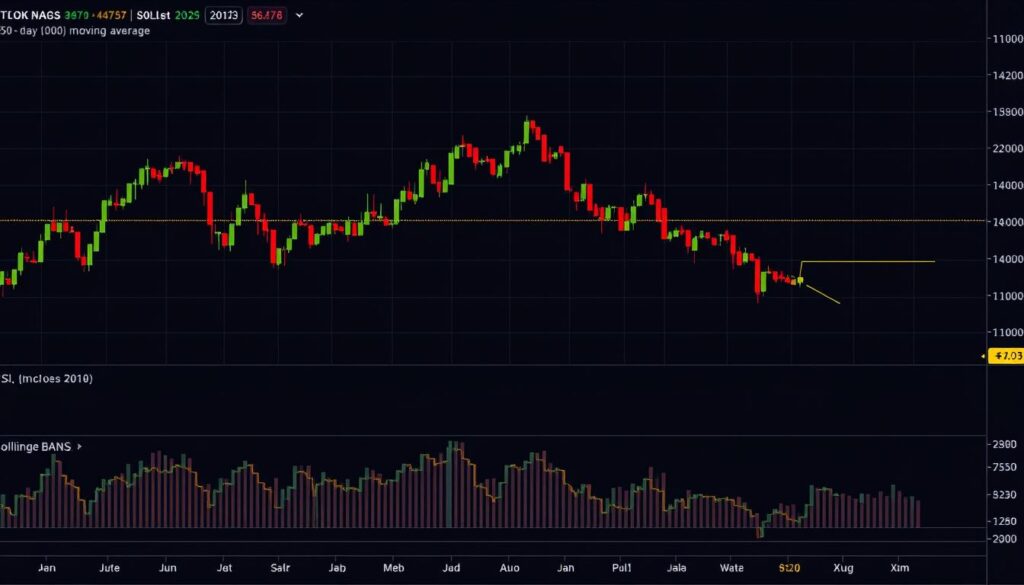
Moving averages and RSI indicators provide critical investment signals
Technical analysis provides a structured approach to predicting price movements based on historical data patterns. For crypto investors, these tools offer invaluable insights into market momentum and potential reversal points.
Moving Averages: Trend Direction and Strength
Moving averages smooth out price action to reveal underlying trends. The 50-day and 200-day moving averages are particularly significant for crypto investments:
- Golden Cross (50-day crosses above 200-day): Historically signals the beginning of bull markets
- Death Cross (50-day crosses below 200-day): Often precedes extended downtrends
- Price above both MAs: Strong uptrend confirmation
- Price below both MAs: Confirmed downtrend
During the 2020-2021 bull run, Bitcoin maintained position above both moving averages for over 12 months, providing investors with clear trend confirmation for their investment decisions.
Relative Strength Index (RSI): Identifying Overbought and Oversold Conditions
The RSI measures the speed and magnitude of price movements on a scale from 0 to 100. For crypto investments:
- RSI above 70: Potentially overbought conditions
- RSI below 30: Potentially oversold conditions
- RSI divergence from price: Possible trend reversal signal
Educational research shows that Bitcoin’s price has rebounded 87% of the time when the daily RSI dropped below 30, making this a powerful indicator for timing investment entries.
Bollinger Bands: Volatility and Price Targets
Bollinger Bands consist of a middle band (20-day moving average) with upper and lower bands representing standard deviations. These bands expand during high volatility and contract during low volatility periods, helping investors identify:
- Potential breakouts when price approaches band edges after contraction
- Possible mean reversion when price touches outer bands
- Trend strength when price consistently rides along a band
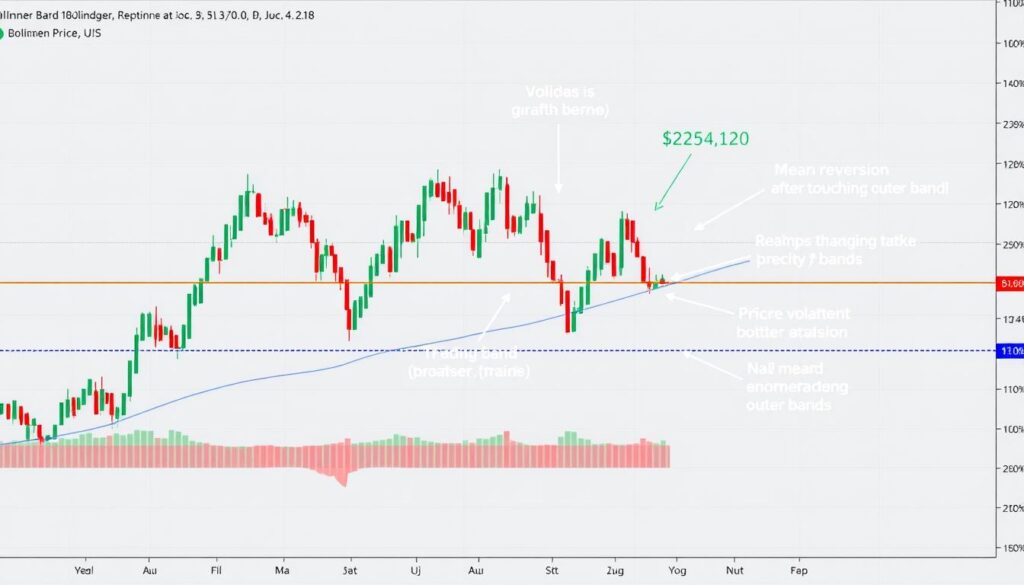
Bollinger Bands help identify potential breakout points for investment timing
On-Chain Data: Blockchain’s Investment Edge
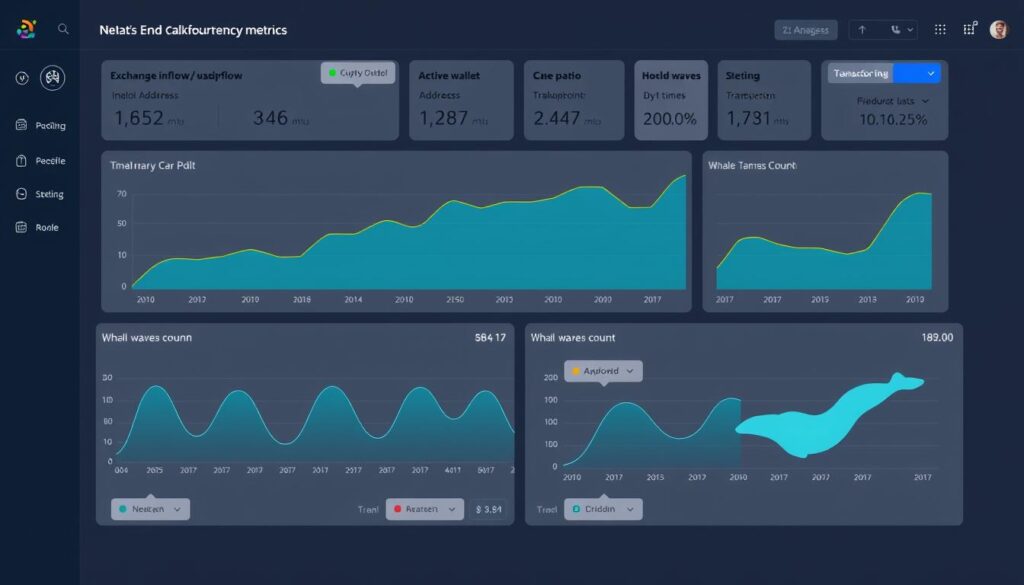
On-chain metrics provide unique insights unavailable in traditional markets
On-chain data represents cryptocurrency’s unique advantage over traditional markets—transparent blockchain activity visible to all investors. These metrics reveal actual user behavior rather than just price movements.
Exchange Inflows and Outflows: Supply Pressure Indicator
When investors move large amounts of cryptocurrency to exchanges, it often signals selling intent. Conversely, outflows from exchanges to private wallets typically indicate accumulation and holding behavior.
Glassnode data shows that sustained exchange outflows preceded Bitcoin’s 2020-2021 bull run by several months, giving attentive investors early signals for their investment strategy.
Active Addresses and Network Growth
The number of active addresses on a blockchain network serves as a fundamental growth metric. Increasing active addresses correlate strongly with price appreciation over the medium to long term.
Educational analysis reveals that sustained 30%+ growth in active addresses has preceded major price rallies in Bitcoin, Ethereum, and other major cryptocurrencies, making this a valuable leading indicator for investment decisions.
HODL Waves and Coin Age
HODL waves visualize the age distribution of the circulating supply, showing what percentage of coins have moved within specific timeframes. When long-term holders (1+ years) increase their percentage of supply, it typically indicates accumulation phases ideal for strategic investment.
Unlock the Power of On-Chain Analysis
Our comprehensive guide explains how to interpret on-chain signals for more informed investment timing and asset selection.
Regulatory News Impact on Crypto Investment
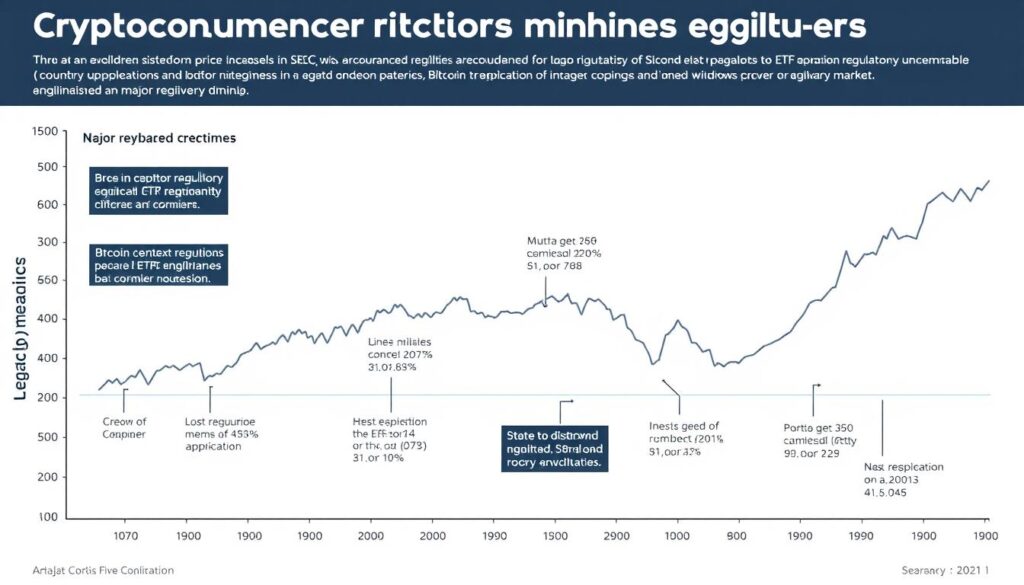
Regulatory announcements create both risks and opportunities for crypto investors
Regulatory developments significantly impact cryptocurrency markets, creating both risks and opportunities for informed investors. Understanding how to interpret and anticipate regulatory news provides a substantial edge.
SEC Decisions and Market Reactions
Securities and Exchange Commission rulings on cryptocurrency classification, ETF approvals, and enforcement actions typically trigger immediate market responses. Historical data shows:
- ETF approval rumors: 15-25% price increases
- ETF rejections: 10-20% short-term corrections
- Enforcement actions against major projects: 20-40% sector-specific declines
Educational analysis of market reactions shows that initial responses are often exaggerated, creating potential investment opportunities for those who understand the actual regulatory implications.
Global Regulatory Frameworks
Different countries adopt varying approaches to cryptocurrency regulation, from embracing innovation to implementing restrictions. Major regulatory shifts in key markets like the US, EU, China, and Japan create ripple effects across the global crypto market.
Investors who monitor global regulatory developments gain early insights into potential market shifts, allowing for proactive investment positioning before news becomes widely recognized.

Global regulatory landscape affects investment opportunities across regions
Volume Analysis: Confirming Investment Signals
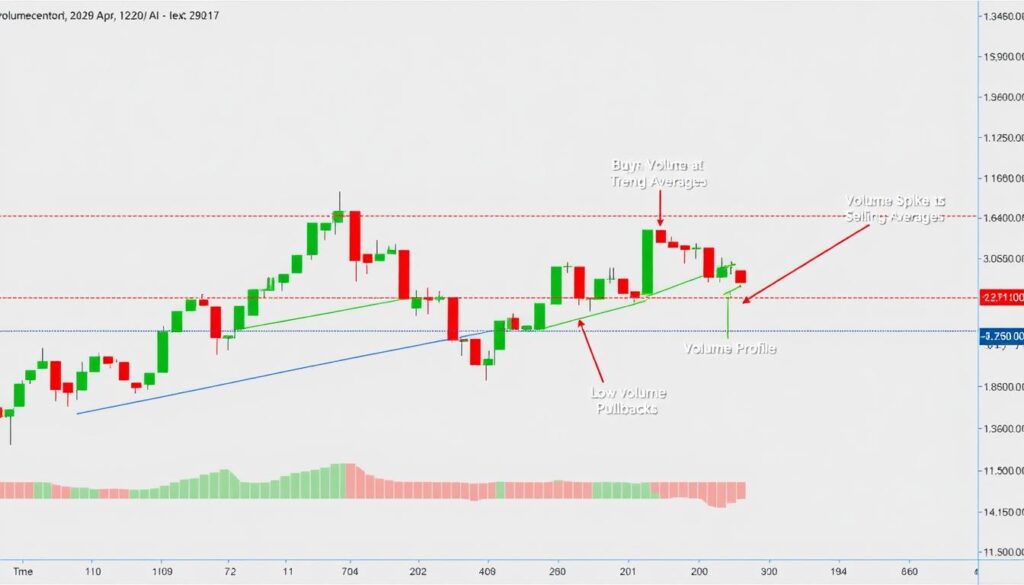
Volume confirms price movements and helps validate investment signals
Trading volume serves as a critical confirmation indicator for price movements. Strong volume validates trends while low volume suggests potential reversals, helping investors distinguish between genuine market moves and false signals.
Volume Precedes Price
A fundamental principle in market analysis is that volume often precedes price movements. Increasing volume during consolidation phases frequently signals impending breakouts, giving attentive investors early positioning opportunities.
Educational research shows that crypto price breakouts accompanied by 200%+ average volume have resulted in sustainable trends 76% of the time, compared to only 31% sustainability for low-volume breakouts.
Volume Profile and Key Levels
Volume profile analysis reveals price levels where significant trading activity has occurred, identifying key support and resistance zones based on actual market participation rather than just price action.
These high-volume nodes often serve as powerful technical levels that influence future price movements, providing investors with strategic entry and exit points for their positions.
Correlation Analysis for Diversified Investment
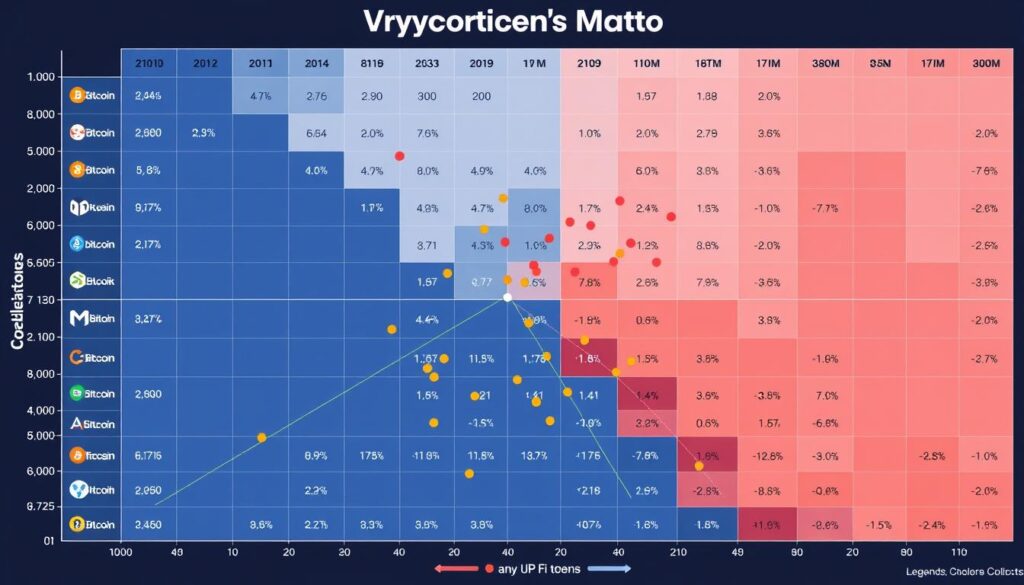
Understanding correlations helps build diversified crypto portfolios
Correlation analysis reveals how different cryptocurrencies move in relation to each other and to traditional markets. This knowledge enables investors to build truly diversified portfolios that can withstand market-specific shocks.
Intra-Crypto Correlations
Most cryptocurrencies show strong positive correlations with Bitcoin, but the strength varies significantly across different market segments:
- Large-cap altcoins: 0.7-0.9 correlation with Bitcoin
- DeFi tokens: 0.4-0.7 correlation with Bitcoin
- Gaming/Metaverse tokens: 0.3-0.6 correlation with Bitcoin
Understanding these relationships helps investors select assets that provide genuine diversification benefits within their crypto investment allocation.
Crypto-Traditional Market Correlations
Cryptocurrency correlations with traditional assets like stocks, bonds, and gold have evolved over time. Recent years have shown increasing correlation with technology stocks during market stress periods, affecting diversification benefits.
Educational analysis shows that Bitcoin’s correlation with the S&P 500 has ranged from -0.2 to +0.6 over different market cycles, highlighting the dynamic nature of these relationships and their impact on portfolio construction.
Market Structure: Reading the Investment Roadmap
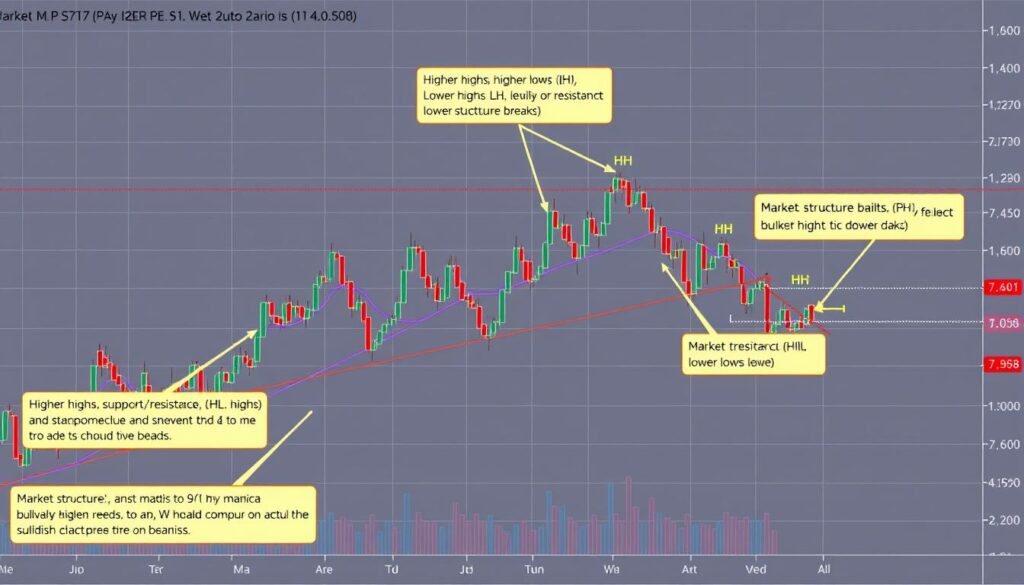
Market structure provides the framework for trend analysis
Market structure analysis examines the pattern of highs and lows to determine the overall trend direction and strength. This fundamental approach helps investors identify the market’s current phase and likely future direction.
Higher Highs and Higher Lows: Uptrend Confirmation
A series of higher highs (HH) and higher lows (HL) defines an uptrend. This pattern indicates buyer dominance and suggests continuation of the bullish phase, supporting accumulation strategies for investors.
Educational backtesting shows that entering after the formation of the second higher low in Bitcoin has yielded positive returns in 83% of cases since 2015, with average gains of 47% before the trend reversal.
Lower Highs and Lower Lows: Downtrend Confirmation
Conversely, lower highs (LH) and lower lows (LL) signal a downtrend, indicating seller control and suggesting defensive positioning for investors. This pattern often continues until a significant market structure break occurs.
Market Structure Breaks: Trend Reversal Signals
When an established pattern of highs and lows breaks, it often signals a potential trend reversal. These market structure breaks provide some of the most reliable entry and exit signals for long-term investors.
Actionable Investment Tips for Crypto Market Navigation

Combining multiple indicators creates a robust investment framework
Integrate Multiple Indicator Types
The most reliable investment signals occur when multiple indicator categories align. Consider creating a personal dashboard that integrates:
- At least one sentiment indicator (Fear & Greed Index)
- Two technical indicators (Moving Averages + RSI)
- One on-chain metric (Exchange Flows or Active Addresses)
- Volume confirmation
This multi-factor approach significantly reduces false signals and increases confidence in investment decisions.
Establish Indicator Hierarchies
Not all indicators carry equal weight. Develop a personal hierarchy based on historical reliability for your investment style:
- Primary indicators: Guide overall market positioning
- Secondary indicators: Confirm primary signals
- Tertiary indicators: Fine-tune entry and exit timing
This structured approach prevents information overload while ensuring all relevant data informs your investment decisions.
Maintain a Market Indicator Journal
Document which indicators provided reliable signals and which generated false alarms. This personal database becomes increasingly valuable over time, allowing you to refine your investment approach based on empirical results rather than theory alone.
Elevate Your Crypto Investment Strategy
Get our comprehensive indicator framework template and weekly market analysis to build a data-driven approach to cryptocurrency investing.
Conclusion: Building Your Investment Edge

Informed investors gain a significant edge in the volatile crypto market
The cryptocurrency market rewards those who make decisions based on data rather than emotion. By mastering the key indicators covered in this guide—from sentiment analysis to on-chain metrics—you develop a significant edge in your investment approach.
Remember that no single indicator provides perfect signals. The true power comes from understanding how these various metrics interact and complement each other, creating a comprehensive view of market conditions that guides intelligent investment decisions.
As the crypto market continues to evolve, so too will the indicators that matter most. Commit to ongoing education and regular review of your analytical framework to ensure your investment strategy remains effective in this dynamic environment.

