

The Internet Promised Us a Revolution. So, What Happened?
Remember the early days of the internet? That dial-up tone was the sound of freedom. It felt like a digital Wild West, a place where anyone could build something, say anything, and connect with anyone else on the planet. It was decentralized by its very nature. But somewhere along the way, the pioneers settled down and built walled gardens. Today, a handful of massive corporations act as the landlords of our digital lives, and we’re just renting space. The long-term vision for a user-owned internet isn’t just a technical upgrade; it’s a philosophical reboot designed to return power to the people who actually create the value: you and me.
We’ve traded convenience for control, and the bill is coming due. Our data is harvested and sold, our content can be de-platformed at a moment’s notice, and the rules of the game are written by a select few in Silicon Valley boardrooms. It’s a system that feels fundamentally broken. But what if it didn’t have to be this way? What if we could build a new layer on top of the existing internet, one founded on principles of ownership, transparency, and collective governance? This isn’t a pipe dream. It’s the promise of Web3, and it’s being built, block by block, right now.
Key Takeaways:
- The current internet (Web2) is dominated by centralized platforms that control user data and content.
- A user-owned internet (Web3) aims to shift power back to users through decentralization, digital ownership, and community governance.
- Technologies like blockchain, smart contracts, and DAOs are the fundamental building blocks of this new digital paradigm.
- While promising, the transition faces significant challenges, including user experience, scalability, and regulatory uncertainty.
The Problem We’re Trying to Solve: A Web of Walled Gardens
Before we can truly appreciate where we’re going, we have to be brutally honest about where we are. The internet of today, often called Web2, is an ecosystem of powerful monopolies. Think about it. Where do you search for information? Google. Where do you connect with friends? Meta’s platforms. Where do you shop? Amazon. These companies have provided incredible value, no doubt about it. But their business models rely on a fundamental imbalance of power.
You are the product. Your clicks, your photos, your conversations, your search history—it’s all data. And data is the new oil. This data is used to build incredibly detailed profiles about you, which are then sold to advertisers. You don’t own your profile on these platforms. You don’t truly own the list of followers you’ve spent years building. If the platform decides to change its algorithm or suspend your account, your digital identity and your audience can vanish overnight. That’s not ownership; it’s digital feudalism. The platform is the king, and we are the serfs, working the land in exchange for a place to live.
The Core Pillars of a User-Owned Internet
So, what’s the alternative? A user-owned and governed internet is built on a few core, non-negotiable principles. These aren’t just technical features; they’re a new social contract for our digital world.
Decentralization: The Bedrock of Freedom
This is the big one. Instead of data and applications living on servers owned by a single company (like Google or Facebook), they live on a network of thousands or even millions of computers run by people all over the world. A blockchain is the most famous example of this. There’s no central point of failure. No single entity can shut it down, censor information, or change the rules on a whim. If one computer goes offline, the network keeps running. This creates a system that is inherently more resilient, open, and censorship-resistant. It’s the difference between a kingdom ruled by one and a federation of independent states working together.
Digital Sovereignty and Data Ownership
In a user-owned internet, you control your data. It’s that simple. Instead of logging in with a Google account, you’d connect to applications with a crypto wallet—a digital identity that you, and only you, control. This wallet holds your assets, your data, and your reputation. You grant applications permission to access specific pieces of your data for a specific purpose, and you can revoke that permission at any time. Imagine a social media platform where you could take your posts, your social graph (your friends and followers), and your entire history with you to a competing platform. That’s real ownership. It forces platforms to compete for your business based on the quality of their service, not by locking you into their ecosystem.
Community Governance: From Users to Stakeholders
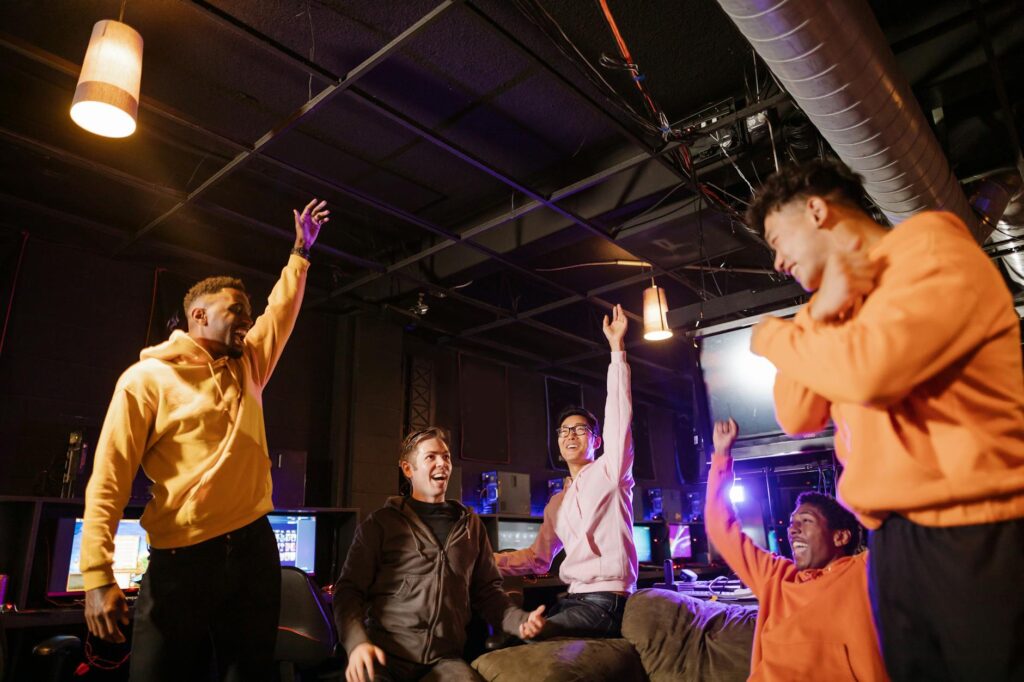
This might be the most revolutionary piece of the puzzle. What if the users of a platform could vote on its future? In the world of Web3, this is happening through something called a DAO, or a Decentralized Autonomous Organization. Think of it like a co-op for the internet.
DAOs use governance tokens (a type of cryptocurrency) to represent ownership and voting rights. The more you contribute to the network—by creating content, developing code, or participating in the community—the more tokens you might earn. These tokens give you a real say in major decisions:
- How should the platform’s treasury be spent?
- What new features should be prioritized?
- How should the content moderation policies be updated?
It transforms users from passive consumers into active stakeholders. Suddenly, you’re not just using a product; you’re helping to build and govern it. The incentives are aligned. When the platform succeeds, the community of token-holders succeeds with it.
Open and Permissionless Innovation
Most of the Web3 world is built on open-source code. This means anyone can see how a platform is built, anyone can use the code to build something new on top of it, and no one can stop you from participating. This is what developers call “composability,” or the idea of digital Legos. One team can build a decentralized financial protocol, and another team can immediately build a new user-friendly interface on top of it without asking for permission. This accelerates innovation at a blistering pace. It’s a return to the early web’s spirit of open collaboration, a direct contrast to the closed, proprietary APIs of today’s tech giants.
The Tech Stack Making It All Possible
This vision isn’t just theory; it’s being powered by a rapidly evolving stack of technologies. You don’t need to be a cryptographer to grasp the basics.
- Blockchain: This is the foundational layer. A shared, immutable ledger that records transactions and data across a distributed network. It’s the source of truth that doesn’t require a central authority to maintain. Bitcoin and Ethereum are the most well-known examples.
- Smart Contracts: These are self-executing contracts with the terms of the agreement directly written into code. They live on the blockchain and run automatically when certain conditions are met. They are the engine that powers everything from financial transactions to DAO voting, all without needing a middleman.
- Crypto Wallets: Think of this as your digital passport and bank account rolled into one. It’s the software (like MetaMask or Phantom) that allows you to interact with decentralized applications (dApps) and manage your digital assets (cryptocurrencies, NFTs, etc.). It’s your key to the user-owned internet.
- Decentralized Storage: Where does all the data live? Instead of Amazon Web Services, a user-owned web relies on decentralized storage networks like IPFS or Arweave. These services allow files to be stored across a peer-to-peer network, making them more resilient and censorship-resistant.
- Decentralized Identity (DID): This is the system that allows you to own and control your digital identity without relying on a centralized provider. Your identity isn’t tied to an email address or a social media account; it’s tied to your wallet, which you control.
“The next era of the internet isn’t just about new tech; it’s about new economic and social models. We’re moving from a model of extraction to a model of co-creation and co-ownership.”
The Hurdles We Still Need to Clear
Let’s be realistic. This transition isn’t going to happen overnight, and the road is filled with some serious bumps. Building a truly user-owned internet means tackling some tough challenges head-on.
First, there’s the user experience (UX). Right now, interacting with Web3 can be clunky and intimidating for the average person. Managing private keys, paying for “gas” fees, and understanding the complexities of different blockchains is a far cry from the seamless experience of logging in with Facebook. For this to go mainstream, it needs to become so easy that your grandma can use it without thinking twice.
Second is scalability. Blockchains like Ethereum can get congested, leading to slow transaction times and high fees. While solutions like Layer 2 scaling are making huge strides, we’re not yet at a point where a decentralized network can handle the transaction volume of a global platform like Visa or Twitter without breaking a sweat.
Finally, there’s the wild west of regulation. Governments around the world are still figuring out how to approach this new technology. The lack of clear rules creates uncertainty for builders and investors alike. Striking the right balance between fostering innovation and protecting consumers is a massive challenge that will define the next decade.
And of course, we can’t ignore the scams and speculative bubbles that have given crypto a bad name. Legitimate, world-changing technology is being built, but it’s often overshadowed by the noise. Education and a focus on long-term utility are the only antidotes.
Conclusion: It’s a Marathon, Not a Sprint
The vision for a user-owned and governed internet is ambitious, idealistic, and absolutely necessary. It’s a response to the cracks that have formed in the foundation of our digital society. It’s an attempt to build a more equitable, transparent, and resilient digital world where value flows back to the creators and users, not just the platform owners.
Will it be perfect? Of course not. New challenges, like governance disputes and novel forms of manipulation, will arise. But the core difference is that the tools to solve these problems will be in the hands of the community, not a secretive cabal of executives. We are in the very early innings of this transformation. It’s messy, it’s volatile, and much of the technology is still experimental. But the foundational shift from renting to owning our digital lives is a one-way door. The genie is out of the bottle, and it’s not going back in.
FAQ
Is Web3 the same as the ‘metaverse’?
Not exactly, but they are closely related. Think of Web3 as the underlying infrastructure—the decentralized plumbing for ownership, identity, and finance. The metaverse is a vision for a 3D, immersive internet that will be built on top of this infrastructure. A true, open metaverse will almost certainly need to be a user-owned internet to avoid being controlled by a single company.
Do I need to be a coder or an investor to participate?
Absolutely not. While developers and investors are building the core infrastructure, the network needs everyone. You can participate by using dApps, joining a DAO community that interests you, creating content on a Web3 platform, or simply by learning and educating others. The easiest first step is often setting up a crypto wallet and exploring some of the user-friendly applications that are emerging.
Isn’t this just about cryptocurrency speculation?
While speculation has dominated the headlines, it’s only a small part of the story. The real revolution is in the technology’s ability to create new systems of coordination and ownership. Digital art (NFTs), decentralized finance (DeFi), community governance (DAOs), and secure identity are all powerful applications that have nothing to do with the price of Bitcoin going up or down. The financial aspect is just one tool to enable a much broader social and technological shift.

