

The Game Has Changed: Unpacking the New World of Retail Investor Behavior
Remember what investing used to look like? For most people, it was a foggy, inaccessible world. You’d call a guy in a suit, pay him a hefty commission, and he’d put you into a handful of mutual funds with expense ratios that would make your eyes water. The idea of building your own diversified, global portfolio for pennies on the dollar was pure fantasy. But then, the Exchange-Traded Fund (ETF) came along and didn’t just change the rules—it completely torched the rulebook. The resulting shift in retail investor behavior has been nothing short of a revolution, transforming everyday people from passive clients into active architects of their own financial futures.
We’ve moved from a world where investing was *done to you* to one where you are firmly in the driver’s seat. The ETF was the key that unlocked the car, and now everyone’s learning how to drive. Some are sticking to the slow lane with index funds, others are test-driving high-octane thematic vehicles, and a whole new group is using these tools to venture into once-unreachable territories like cryptocurrency. It’s a new landscape, and understanding it is critical for anyone with a dollar to invest.
Key Takeaways:
- Democratization of Diversification: ETFs made it simple and cheap for anyone to own a slice of the entire market, a privilege once reserved for the wealthy.
- The Passive Core: The foundation of most modern retail portfolios is now built on low-cost, broad-market index ETFs like those tracking the S&P 500.
- The Rise of the Thematic Investor: Investors are now using niche ETFs to bet on specific trends, from AI and robotics to clean energy and even cryptocurrency.
- Portfolio as Identity: Investing is becoming a form of self-expression, with people aligning their portfolios with their values and beliefs.
- Lowered Barriers, Higher Responsibility: While access is easier than ever, the onus is now on the individual to navigate the risks and psychology of a constantly connected market.
The Great Unbundling: From Gatekeepers to Market Access for All
Before ETFs became mainstream, the mutual fund was king. And the king charged a royal tax. You paid for the privilege of investing, and you paid a lot. The shift away from this model wasn’t just about cost; it was a fundamental change in the power dynamic between Wall Street and Main Street.
The Cost Revolution: Why 1% Was a Really Big Deal
It’s hard to overstate how much of a roadblock fees were. A typical actively managed mutual fund might charge an expense ratio of 1% or more. That doesn’t sound like much, does it? But let’s run the numbers. On a $100,000 portfolio, that’s $1,000 a year. Every year. Compounded over 30 years, that 1% fee could devour hundreds of thousands of dollars of your potential returns. It was a silent killer of wealth.
Enter the ETF. A broad-market index ETF, like one that tracks the S&P 500, can have an expense ratio as low as 0.03%. That’s just $30 a year on that same $100,000 portfolio. Suddenly, the tollbooth on the highway to wealth creation was virtually eliminated. This single change put the power of compounding firmly back in the hands of the individual investor.
Diversification on a Dime
The other magic trick of the ETF was instant diversification. Want to own a piece of the 500 largest companies in America? Before, you’d either have to buy 500 different stocks (impossible for most) or buy a pricey mutual fund. Now, you can buy a single share of an S&P 500 ETF and, for a couple hundred bucks, you’re in the game. You’re diversified. You own a piece of Apple, Microsoft, Amazon, and 497 of their friends. This wasn’t just an improvement; it was a paradigm shift that made proper portfolio construction accessible to everyone, not just institutional players.

The New Playbook: How Retail Investor Behavior is Evolving
With the tools in hand, the way people actually invest has morphed dramatically. The modern retail investor is a complex creature—part passive believer, part active speculator, and part storyteller. Their behavior is a fascinating blend of discipline and impulse.
The Passive-Aggressive Portfolio
The core of most savvy retail investors’ portfolios today is decidedly passive. They buy and hold low-cost index funds, embracing the Boglehead philosophy that trying to beat the market is a fool’s errand. This is the ‘set-it-and-forget-it’ foundation. It’s smart, it’s simple, and it works. But that’s not the whole story.
Around this stable core, investors are getting more ‘active’ with their passive tools. They are using ETFs to tilt their portfolios in specific directions. They might overweight technology with a NASDAQ-100 ETF or add international exposure with an all-world ex-US fund. It’s a hybrid approach—a passive core with active, strategic satellites. This is a level of sophistication that was simply out of reach for the average person just a generation ago.
The Rise of the Thematic Investor
This is where things get really interesting. People aren’t just buying ‘the market’ anymore. They’re buying stories, trends, and revolutions. Thematic ETFs allow investors to place concentrated bets on the industries they believe will shape the future. The options are dizzying:
- Technology & Innovation: ETFs focused on Artificial Intelligence (AI), Robotics, Cybersecurity, and Cloud Computing.
- Social & Demographic Shifts: Funds that track trends like the rise of the Millennial consumer, advancements in genomics and healthcare, or the pet care industry.
- Sustainability: A massive and growing category of ETFs that invest in clean energy, water conservation, and companies with high ESG (Environmental, Social, and Governance) scores.
- Niche Industries: You can find ETFs for almost anything now—video games and esports, cannabis, and even space exploration.
This trend shows that investors want to do more than just make money; they want to participate in the future they envision. It transforms a portfolio from a boring spreadsheet into a narrative about one’s own beliefs and predictions.
Beyond Stocks and Bonds: The Final Frontiers
The ETF wrapper has proven so flexible that it’s now being used to bring once-fringe asset classes into the mainstream. The most explosive example of this, of course, is cryptocurrency.
Cryptocurrency Enters the Mainstream (via an ETF Wrapper)
For years, buying Bitcoin or Ethereum was a complicated and intimidating process. It involved setting up accounts on crypto exchanges, managing digital wallets, and worrying about private keys. It was a world reserved for the tech-savvy and the risk-tolerant. The recent approval of spot Bitcoin ETFs in the United States changed all of that overnight.
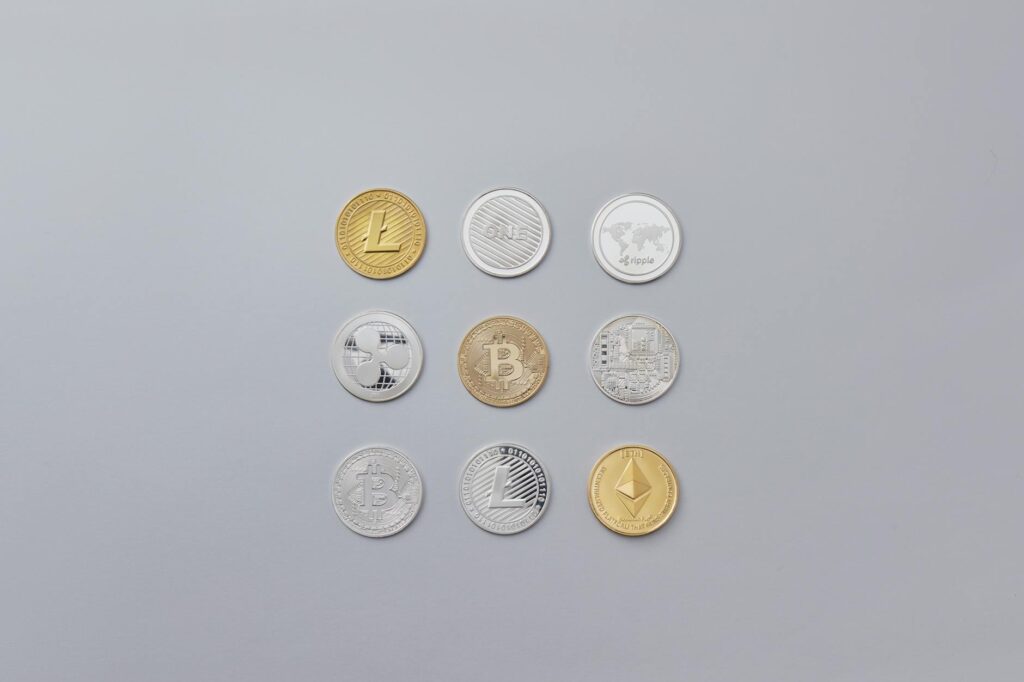
Now, anyone with a regular brokerage account can get exposure to Bitcoin with a few clicks. You can buy it right alongside your shares of Apple and your S&P 500 fund. This is a monumental shift. It provides a regulatory-approved, familiar on-ramp for a massive pool of retail capital that was previously sitting on the sidelines. It grants a layer of legitimacy and perceived safety to an asset class often dismissed as the ‘Wild West’ of finance.
The spot Bitcoin ETF isn’t just a new product; it’s a bridge. It connects the highly regulated, traditional world of finance with the decentralized, digital frontier of crypto, and retail investors are eagerly walking across it.
The ‘Portfolio as an Identity’ Phenomenon
When you combine thematic investing with the accessibility of crypto, you get a powerful new trend: the portfolio as a form of self-expression. Investing is no longer a purely financial decision; it’s a statement. Are you a tech optimist? There’s an ETF for that. A believer in green energy? You can build a portfolio around it. Do you see Bitcoin as the future of money? You can now reflect that belief in your IRA.
This intertwining of identity and investment is a hallmark of the modern retail investor. They are not just seeking returns; they are seeking alignment between their money and their values.
The Tools and Psychology of the Modern Investor
This new era of empowerment comes with its own set of challenges. Unprecedented access is coupled with an unprecedented firehose of information and the temptation for constant action.
The Double-Edged Sword of Information
Today’s investors have access to more information than any generation in history. The problem is, not all of it is good. They are bombarded with news, analysis, and ‘hot tips’ from a million different sources: financial news networks, Twitter (X), Reddit forums like r/wallstreetbets, and TikTok finance gurus (‘FinTok’).
This can lead to a state of analysis paralysis or, worse, action based on hype and FOMO (Fear Of Missing Out) rather than sound research. Navigating this information overload to separate the signal from the noise is perhaps the single greatest challenge for the modern retail investor.
From Set-and-Forget to Check-and-Tinker
With commission-free trading apps in our pockets, the market is always just a thumbprint away. This constant access makes a disciplined, long-term approach more difficult. It’s incredibly tempting to check your portfolio multiple times a day, to tinker with your holdings, and to react emotionally to short-term market fluctuations. This behavior—over-trading and performance chasing—is a well-documented way to destroy returns. The very tools that have democratized investing have also amplified the potential for self-sabotage through bad behavioral finance.
Conclusion: What’s Next for the Retail Investor?
The post-ETF world has fundamentally rewired **retail investor behavior**. We’ve moved from a passive, high-cost model to an active, low-cost, and highly personalized one. The retail investor is now more sophisticated, more engaged, and more powerful than ever before. They build portfolios around a core of passive index funds and then use a vast menu of thematic and alternative ETFs to express their unique views on the world.
Looking ahead, this trend is only likely to accelerate. We’ll see even more niche products, potentially fractional shares of ETFs to further lower the barrier to entry, and the ‘tokenization’ of other alternative assets brought into the ETF wrapper. The game has changed for good. The challenge now is not one of access, but of education and discipline. The tools for building wealth are in everyone’s hands; the new frontier is mastering the psychology to wield them wisely.
FAQ
Are ETFs always better than mutual funds?
For most retail investors, the lower costs, greater tax efficiency (in taxable accounts), and intraday tradability of ETFs make them a superior choice to traditional mutual funds. However, some specialized, actively managed mutual funds may still appeal to investors looking for a specific manager’s expertise, though they almost always come with higher fees.
How have crypto ETFs changed the game for regular investors?
Crypto ETFs, specifically spot Bitcoin ETFs, have been revolutionary. They eliminate the technical hurdles and security concerns of buying crypto directly. Investors can now gain exposure to Bitcoin within their existing, regulated brokerage accounts, treating it like any other stock or bond. This has made the asset class accessible to a much broader audience and added a layer of legitimacy.
Is thematic investing too risky?
It can be. Thematic ETFs are, by nature, less diversified than broad-market index funds. They are a concentrated bet on a specific industry or trend. While the potential rewards can be higher if that trend takes off, the risk of loss is also significantly greater. Most financial advisors recommend that thematic ETFs should only make up a small, satellite portion of a well-diversified portfolio, not the core of it.

