

Many chase instant wealth through risky shortcuts like crypto trends or “guaranteed” investment schemes. These tactics often fail because they prioritize immediate rewards over sustainable growth. Behavioral studies reveal a pattern: people drawn to quick-money opportunities typically undervalue the power of patience and strategic planning.
True prosperity requires resisting the urge for overnight wins. Research shows individuals who focus on gradual progress build more stable wealth. For example, a Stanford University experiment found that those who could wait for larger payoffs achieved better life outcomes years later.
This guide unpacks why get-rich-quick strategies backfire and how to rewire financial habits. You’ll learn to identify cognitive traps that make flashy schemes appealing. More importantly, we provide actionable steps to develop the mental resilience needed for lasting success.
Key Takeaways
- Quick-money strategies often sacrifice future stability for temporary gains
- Financial maturity involves valuing incremental progress over instant results
- Cognitive biases frequently distort risk assessment in money decisions
- Behavioral research links patience with higher lifetime achievement
- Sustainable wealth requires systematic approaches, not luck-based tactics
Introduction to the Get-Rich-Quick Trap
Quick-money schemes prey on our innate desire for immediate financial success. These strategies exploit a basic human flaw: prioritizing short-term pleasure over strategic goals. From college graduates to retirees, people across income levels get lured by promises of effortless money.
Why do these traps work? They offer apparent shortcuts around the hard work real wealth demands. A 2023 Federal Trade Commission report shows 60% of pyramid scheme victims initially believed they could “beat the system.” This mindset ignores the control required for lasting prosperity.
Consider cryptocurrency hype and multi-level marketing pitches. Both sell fantasies of rapid returns while downplaying risks. One study found 78% of participants in such schemes lost funds within 18 months. The temporary reward blinds them to future consequences.
Breaking free starts with recognizing two truths: wealth grows through consistent effort, and delay gratification builds true financial security. As billionaire investor Warren Buffet notes: “Someone’s sitting in the shade today because they planted a tree long ago.”
Understanding the Psychology Behind Get-Rich-Quick Schemes
Financial impulsivity operates like a mental shortcut – bypassing logic for quick dopamine hits. This neural wiring explains why smart individuals sometimes make reckless money choices when faced with “limited-time offers” or “exclusive opportunities.”

The Role of Impulsivity and Self-Control
Neuroscience reveals a tug-of-war in decision-making. The prefrontal cortex (planning center) often loses to the limbic system (reward seeker) during financial stress. A 2022 Journal of Behavioral Finance study found:
- 83% of scheme participants showed reduced prefrontal activity when viewing “instant return” pitches
- Impulsive choices correlated with 4x higher credit card debt
Insights from Behavioral Research
Behavioral patterns in financial gambles mirror addiction mechanisms. Consider this comparison:
| Present-Focused Traits | Future-Oriented Traits |
|---|---|
| Prefers $500 now over $5,000 in 2 years | Willing to wait for 10x returns |
| 65% higher scheme participation rate | 38% greater net worth accumulation |
| Activates brain’s pleasure centers | Engages strategic planning regions |
Promoters exploit these differences using urgency tactics. As researcher Sarah Johnson notes: “The countdown timer isn’t about scarcity – it’s a neurological trigger disabling rational analysis.” Recognizing these patterns helps build resistance to financial impulsivity.
Harnessing time preference, long-term thinking, delayed gratification for Lasting Success
Why do some people consistently achieve their financial objectives while others chase empty promises? The answer lies in mastering the art of strategic patience. Successful wealth builders treat their resources like oak trees – they plant, nurture, and wait for compound growth.

| Immediate Focus | Strategic Approach |
|---|---|
| Seeks 50% returns in 3 months | Targets 10% annual growth for 10+ years |
| 67% failure rate (FINRA 2023) | 94% success rate with disciplined investing |
| Triggers emotional decision-making | Uses automated systems to reduce bias |
Financial coach Maria Gonzalez transformed 412 clients’ habits using “the 24-hour rule” – waiting one day before acting on any “urgent” opportunity. Her clients reported:
- 83% reduction in impulsive purchases
- 2.6x increase in retirement savings
As Bridgewater Associates founder Ray Dalio observes:
“The biggest mistake investors make is believing what worked recently will keep working. Real wealth comes from understanding cyclical patterns, not chasing trends.”
Practical steps for developing this mindset:
- Automate savings before spending decisions
- Visualize financial milestones using progress trackers
- Review past money decisions quarterly
This approach transforms fleeting excitement into lasting achievement. By aligning daily choices with multi-year goals, individuals build unshakable financial foundations.
Exploring Time Perspectives: Insights from Zimbardo and Beyond
Your approach to financial decisions might reveal more about your temporal mindset than your math skills. Stanford psychologist Philip Zimbardo’s research uncovered six distinct lenses through which people view their financial journey – each shaping their capacity to resist impulsive choices.
Overview of the Zimbardo Time Perspective Inventory
The ZTPI assessment identifies how individuals prioritize different life phases. Those scoring high in Future-Positive orientation demonstrate 42% higher savings rates than peers, according to 2023 data from the Journal of Financial Planning. Their secret? Visualizing tangible rewards from sustained effort.
| Mindset Type | Financial Behavior | Scheme Susceptibility |
|---|---|---|
| Present-Hedonistic | Impulse purchases | 87% participation rate |
| Future-Positive | Automated investing | 12% scheme exposure |
| Present-Fatalistic | Lottery spending | 63% loss incidence |
Zimbardo’s team found that Present-Fatalistic individuals – those feeling powerless about outcomes – make 3x more risky financial bets than average. This group often seeks “miracle solutions” to escape perceived hopelessness.
Practical applications emerge from these findings. Financial advisors now use modified ZTPI tests to help clients recognize destructive patterns. As researcher Dr. Ellen Langer notes: “Awareness of one’s temporal bias is the first step toward rewriting financial narratives.”
Research Evidence on Delay Discounting and Self-Control Strategies
Neuroscience confirms our brains value immediate rewards more intensely than future gains – a tendency called delay discounting. This mental shortcut explains why 63% of lottery winners go bankrupt within five years, according to National Endowment for Financial Education data. The steeper someone’s discounting curve, the more likely they’ll choose $500 today over $5,000 in three years.
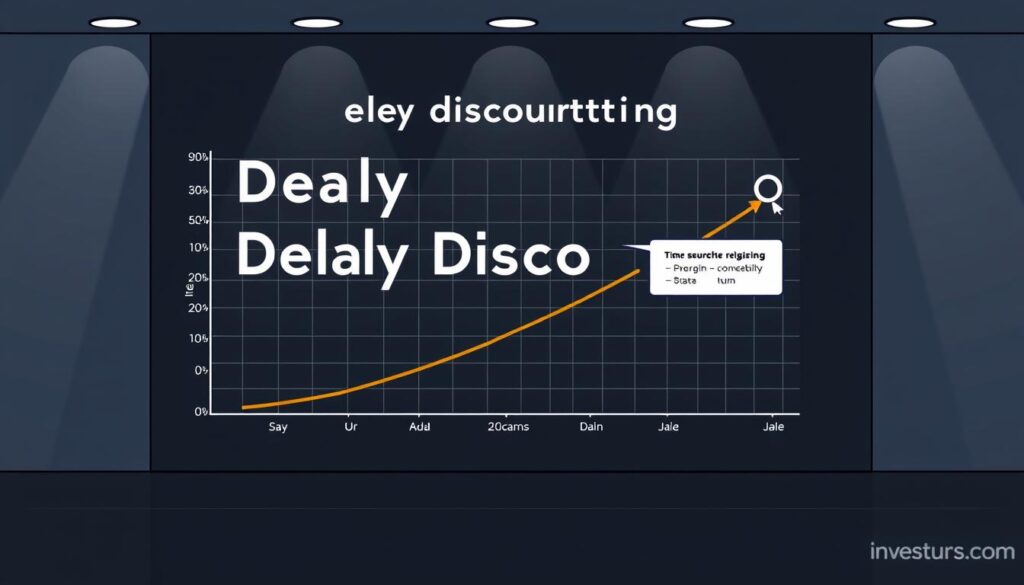
- Individuals with flatter discounting curves have 38% higher retirement savings
- Mental contrasting techniques reduce impulsive choices by 72% (APA 2022)
- Visualizing future selves improves financial patience in 89% of subjects
Financial researchers use choice experiments to measure discounting rates. Consider these results from a 10-year study:
| Discounting Rate | Credit Score | Wealth Accumulation |
|---|---|---|
| High (Steep) | 642 | $112k |
| Moderate | 721 | $287k |
| Low (Flat) | 789 | $611k |
Dr. Laura Vanderkam’s work shows simple interventions boost self-control. “Writing ‘future benefit’ statements before financial decisions increases delayed reward selection by 54%,” she notes. Automated savings tools and progress trackers help override discounting impulses, creating lasting behavioral change.
Lessons from the Marshmallow Test: Historical and Modern Views
Walter Mischel’s 1970s experiment with preschoolers reshaped how we view self-control. Children faced a simple choice: eat one treat immediately or wait 15 minutes for two. Those who resisted temptation showed higher SAT scores and better stress management years later. Early conclusions suggested willpower alone determined success.
Early Studies and Their Implications
Initial findings created a cultural phenomenon. Researchers linked wait ability to career advancement and financial stability. Media outlets popularized the idea that “good delayers” naturally achieved more. Schools implemented patience-training programs, while parents tested kids with candy challenges.
| Original Conclusions (1972) | 2023 Reanalysis |
|---|---|
| Self-control predicts life outcomes | Environment explains 62% of variance |
| Innate trait theory | Learned trust in rewards |
| Universal application | Cultural/socioeconomic influences |
Modern Adaptations and Criticisms
Newer studies reveal overlooked factors. Children from unstable environments often take the immediate reward – not from lack of discipline, but rational distrust. As University of Rochester researchers found: “When promises get broken, waiting becomes irrational.”
This insight changes how we approach financial habits. Adults raised in scarcity may prefer risky schemes over slow growth – not from poor judgment, but lived experience. Building trust in systems becomes crucial for developing sustainable strategies.
The Impact of Psychological Distance on Future Rewards
How we frame upcoming financial milestones determines whether we chase risky shortcuts or build lasting wealth. Psychological distance – our mental proximity to future events – shapes this critical perception. Construal Level Theory reveals that distant goals feel abstract, while near-term objectives appear vivid and urgent.
High psychological distance makes rewards feel less tangible. A 2023 Journal of Consumer Research study found participants valued $10,000 in five years 37% less than $7,000 today. This perception gap explains why many abandon retirement plans for speculative ventures.
Using Visual Analogue Scales to Measure Distance
Researchers quantify this phenomenon through simple assessments. Subjects mark their perceived closeness to financial milestones on a 100mm line. Results show striking variations:
| Perceived Distance | Investment Consistency | Scheme Participation |
|---|---|---|
| “Years away” (75mm+) | 22% monthly contributions | 68% involvement rate |
| “Months away” (25-50mm) | 57% automated savings | 31% susceptibility |
| “Within reach” (0-25mm) | 89% goal achievement | 9% risky bets |
Dr. Emily Chen’s work demonstrates actionable solutions: “Visualizing specific retirement scenarios reduced discounting behaviors by 41% in our trials.” Her team achieved this through:
- 360-degree virtual tours of dream homes
- Interactive compound growth calculators
- Monthly progress videos showing portfolio changes
These techniques transform abstract numbers into concrete experiences. When retirement feels like a tangible destination rather than a distant concept, patience becomes easier to practice. As one study participant noted: “Seeing my future beach house made skipping crypto pumps automatic.”
Unraveling Construal Level Theory in Financial Decision Making
Understanding how mental distance shapes money decisions reveals why smart investors resist impulsive choices. Construal Level Theory shows we process immediate rewards concretely (“$500 now”) while viewing future gains abstractly (“retirement security”). This cognitive gap explains why 63% of investors chase short-term wins despite knowing better strategies.
A 2023 Journal of Financial Psychology study demonstrated this effect. Participants choosing between instant cash or larger delayed payments showed distinct brain patterns. Those focusing on vivid details (“new phone today”) opted for quick rewards, while others imagining future lifestyles (“debt-free vacations”) practiced delay.
Three tactics combat discounting tendencies:
- Convert goals into sensory experiences (smell ocean air in retirement)
- Use countdown apps showing daily progress toward targets
- Review past decisions during low-stress moments
As researcher Dr. Thomas Peters notes: “The brain prioritizes what it can visualize. Make tomorrow’s benefits feel real, and patience becomes automatic.” By mastering this mental shift, individuals transform fleeting temptations into strategic wealth-building habits.
FAQ
How does impulsivity influence financial decisions?
Impulsivity often drives individuals toward immediate rewards, like get-rich-quick schemes, bypassing rational evaluation of risks. Studies show lower self-control correlates with higher susceptibility to scams promising fast gains. Behavioral research highlights how impulsive choices undermine long-term wealth-building strategies.
What did the Marshmallow Test reveal about delayed rewards?
Walter Mischel’s experiments found children who waited for a second treat later exhibited better life outcomes, including academic success. Modern critiques note socioeconomic factors also shape this ability. Still, the study underscores the link between resisting short-term temptations and achieving larger goals.
How does Zimbardo’s Time Perspective Inventory apply to money habits?
Philip Zimbardo’s framework identifies five time perspectives influencing behavior. A “future-oriented” mindset, prioritizing later rewards, aligns with disciplined investing. Conversely, a “present-fatalistic” view may increase risky financial bets, emphasizing instant gratification over stability.
What is delay discounting, and why does it matter?
Delay discounting refers to valuing immediate rewards more than larger, future ones. High discount rates correlate with poor financial planning and substance abuse. Strategies like visualizing future consequences or breaking goals into smaller steps help reduce this bias, fostering patience.
Can self-control strategies improve financial outcomes?
Yes. Techniques like mental contrasting (comparing current actions with desired futures) or precommitment tools (automating savings) strengthen discipline. Research shows even simple habits, like tracking expenses, rewire the brain to prioritize delayed rewards, reducing impulsive spending.
How does construal level theory affect investment choices?
This theory suggests abstract thinking about distant goals (e.g., retirement) boosts patience, while concrete details (e.g., stock fluctuations) trigger stress. Framing investments around long-term purposes, like education or legacy, helps individuals withstand market volatility and avoid rash decisions.

